

Beyond the Gate Man: Why School Safety in Nigeria is Now Everyone’s Business
If you are a parent in Nigeria today, there is a specific kind of prayer you say every morning when your child zips up their backpack and heads out the door. It is a prayer for safety. We live in a time where the news cycle is often filled with stories that make our hearts heavy: stories of bullying that goes too far, drug-related issues creeping into hallways, and the ultimate nightmare of external threats like kidnapping or violent attacks. For a long time, we have operated under the assumption that school safety is simply about having a "Gate Man" with a whistle or a few police officers patrolling the perimeter.
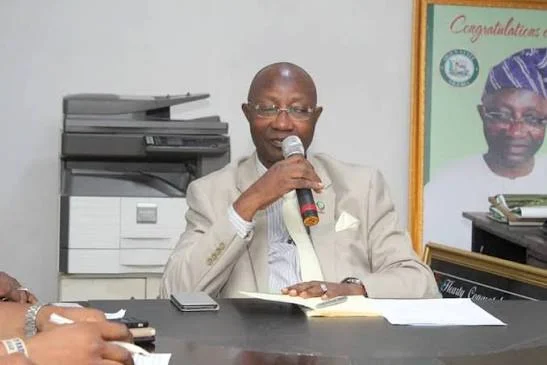
But this past Wednesday in Ikeja, during the 4th Michael Alogba Olukoya Annual Lecture and Award Series, a group of heavyweights in the education and security sectors gathered to deliver a very different message. Organized by the Nigeria Union of Teachers (NUT), Lagos State Wing, the conversation made one thing abundantly clear: we can no longer "police" our way out of this problem. If we want our schools to be the sanctuaries of learning they are meant to be, we need a massive, coordinated effort that involves the government, the teachers, the parents, the local community, and even modern technology providers.
The Definition of a Safe School
The Chairman of the Lagos State NUT, Hassan Akintoye Mujeeb, set the tone for the event with a very grounded perspective. He pointed out that meaningful learning is practically impossible in an atmosphere of fear. Imagine a child trying to solve a mathematics equation while worrying about a bully waiting for them behind the classroom. Imagine a teacher trying to deliver a lesson while feeling intimidated by external forces or unruly students.
A safe school, as Mujeeb described it, is a place where three things happen simultaneously. First, every child feels protected. Second, teachers can do their jobs without looking over their shoulders in fear. And third, parents can release their children every morning with the confidence that they will return home in one piece. To achieve this, Mujeeb argued that the government must step up its game with better infrastructure. We are talking about basic but essential things like proper perimeter fencing, functional security systems, and emergency response mechanisms that actually work when called upon.
The Integrated Security Model: More Than Just Boots on the Ground
When it was time for the security experts to speak, the conversation moved from the emotional to the highly practical. The Lagos State Commissioner of Police, Fatai Tijani, who was represented by Deputy CP Anthony Okonkwo, made a compelling argument. He stated that school safety can no longer be treated as the sole responsibility of the police or the military. The threats we face today are "integrated," meaning they come from both inside and outside the school walls.
The Nigeria Police Force has developed what they call the Safe School Model. This is not just about having a patrol car outside the gate. It is a combination of specialized protection squads, intelligence gathering, and risk assessment. The CP recommended that schools start adopting international frameworks like the Safe Schools Declaration and something called Crime Prevention Through Environmental Design.
What does this mean in plain English? It means designing the school building in a way that makes it hard for criminals to hide or enter. It means installing surveillance cameras that cover blind spots and digital attendance systems that let a parent know exactly when their child enters the school premises. He even proposed "panic buttons" that are linked directly to police command centers. Perhaps most importantly, he suggested the creation of a Safe School Trust Fund. This is a brilliant idea because it acknowledges that while private schools might be able to afford fancy cameras, our under-resourced public schools need a dedicated financial pot to build their own security walls.
Prevention is Cheaper Than Response
The Lagos State Commandant of the Nigerian Security and Civil Defence Corps (NSCDC), Adedotun Keshinro, who was represented by Oluwaseun Abolurin, offered a sobering reality check. He warned that schools are increasingly becoming targets for kidnapping, arson, and even cultism. While Lagos remains relatively peaceful compared to other regions, he cautioned against the "it can’t happen here" mindset.
His most practical advice was about "Threat Assessment." He argued that most crises do not just happen out of the blue. There are always warning signs. A student who starts behaving strangely, a hole in the fence that is never fixed, or a strange person loitering around the gate for three days: these are all "communications" that we need to investigate.
The NSCDC recommended that every school set up a Threat Assessment Team. This team should be trained to spot behavioral warning signs in students and staff. They should conduct regular "vulnerability audits" to find the weak spots in the school’s armor. They should also establish confidential reporting channels so that a student can report a threat or a bully without fear of being labeled a "snitch."
The Teacher and the Parent: The Frontline Defenders
While the technology and the police squads are important, the speakers kept coming back to the human element. Teachers are the "first responders" because they spend the most time with these children. A teacher who is alert can notice when a child is showing signs of emotional distress or abuse long before a security guard does.
But the responsibility does not stop at the school gate. Parents have a massive role to play. Mujeeb urged parents to reinforce moral guidance at home. If a child is taught respect, empathy, and discipline at the breakfast table, they are much less likely to become a threat to their peers in the classroom. Safety is a two way street: the school protects the child from the world, and the parents protect the school by raising children who do not bring violence into the halls.
The Power of Community Ownership
Another key takeaway from the lecture was the idea of School Community Security Committees. A school does not exist in a vacuum. It is part of a neighborhood. The local vulcanizer, the shop owner across the street, and the residents in the nearby houses are all part of the security web. If the community feels a sense of ownership over the school, they become the eyes and ears of the institution. They will be the first to notice a stranger or a suspicious vehicle.
This collaborative approach is the only way forward. We need the Lagos State Ministry of Basic and Secondary Education, led by Commissioner Jamiu Alli Balogun, to work hand in hand with the DSS, the Police, and the NSCDC. We need a system where information flows freely and where every stakeholder knows exactly what to do when the panic button is pressed.
Final Thoughts
The 4th Michael Alogba Olukoya Annual Lecture was a wake up call for all of us. School safety is not a "project" that you finish and move on from. it is a continuous, daily commitment. It is about building a culture where safety is woven into the fabric of the school day.
As we move forward in 2026, let us stop looking only at the police when we talk about security. Let us look at our fences, our technology, our teaching habits, and our parenting styles. Let us build the Safe School Trust Fund and empower our Threat Assessment Teams. As the NSCDC Commandant rightly said, prevention is far cheaper than crisis response. We owe it to the millions of children in Lagos and across Nigeria to ensure that the only thing they have to worry about when they are in school is their next mathematics test. Our children deserve a future without fear, and it is up to all of us to build it together.