

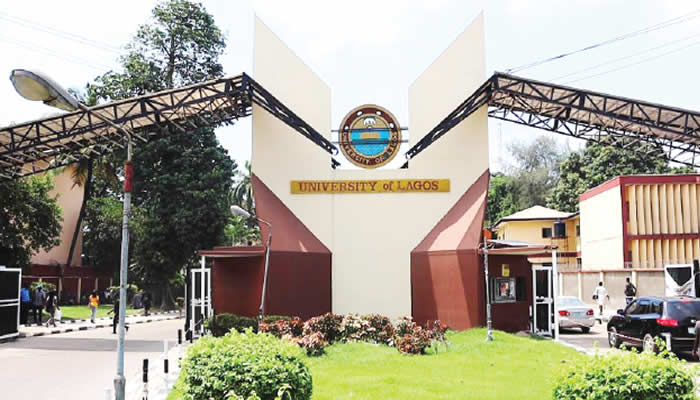
UNILAG Sets July 27 for Post-UTME, Warns Against Exam Malpractice.
The University of Lagos (UNILAG) has issued a firm warning to candidates preparing for its 2026-2027 post-UTME Aptitude Test, urging them to steer clear of examination malpractice and to follow every guideline to the letter.
The online test is scheduled to run from July 27 to July 31, conducted entirely under remote proctoring, a format that places considerably more responsibility on candidates than the traditional, physically supervised exams many are used to.
The warning came in a statement from the university's Registrar and Secretary to Council, Mrs Abosede Wickliffe, who was unambiguous about the stakes involved. She stressed that candidates must comply fully with every examination instruction issued, cautioning that violations, whether deliberate or careless, could result in disqualification or other disciplinary measures. For a screening exercise that determines admission into one of Nigeria's most sought-after universities, that warning carries real weight.
On the technical side, Wickliffe laid out fairly strict equipment requirements. Candidates are required to sit the exam using laptops fitted with built-in webcams and microphones; anything else, mobile phones, tablets, external webcams, smart glasses, or headphones, is explicitly barred from the test environment. The message here seems clear: UNILAG wants a controlled, verifiable setup for every candidate, one that leaves little room for the kind of ambiguity that external devices might introduce.
Beyond the hardware, Wickliffe was equally specific about the physical conditions under which the test must be taken. Candidates are expected to sit the 30-minute exam entirely alone, in a space that is both quiet and well-lit. She warned that behaviours such as speaking during the test, reading questions aloud, or allowing another person into the room at any point would be treated as outright misconduct, regardless of intent. Given that the exam relies on remote proctoring rather than a physical invigilator standing nearby, these conditions function as the university's substitute safeguards, and Wickliffe's language suggests they will be enforced strictly.
Connectivity and power featured prominently in the university's guidance as well. Candidates were urged to secure stable internet access and a reliable power supply for the full duration of the test, with Wickliffe making a point of clarifying where responsibility lies if things go wrong. She stated plainly that the university bears no responsibility for disruptions caused by network failures, power outages, or other issues outside its control, effectively placing the burden of preparation squarely on candidates rather than on the institution. For anyone who does run into technical difficulty mid-exam, the advice was to act immediately: use the platform's "Need Help?" feature the moment a problem arises, rather than waiting and hoping it resolves on its own.
To help candidates avoid exactly these kinds of last-minute surprises, Wickliffe confirmed that a mock examination, available until July 25, is compulsory for everyone sitting the test. Far from being an optional practice run, the mock exam serves a genuinely functional purpose: it checks device compatibility, verifies internet connection quality, confirms that webcams are working correctly, and generally gives candidates a realistic sense of whether they're actually ready for the real thing. Given how much of this year's process depends on technology functioning correctly outside a controlled exam hall, treating the mock test as a mere formality would be a mistake few candidates can afford to make.
Wickliffe went further, advising candidates to use the same laptop, the same internet connection, and the same physical location for both the mock exam and the actual test. The reasoning is straightforward: a setup that works during the mock but changes on exam day introduces risk that candidates have no need to take on. She also flagged an important technical detail that could easily catch candidates off guard: the Safe Examination Browser required for the test only supports Windows 10 or later, and macOS Ventura or later. Anyone running older operating systems will need to sort that out well before July 27, since discovering a compatibility issue on exam day itself would leave little room for correction.
Beyond the technical and logistical guidance, the registrar also addressed a different kind of risk, one rooted not in technology but in exploitation. She cautioned candidates against dealing with unauthorised individuals, cybercafés, business centres, or CBT centres that falsely claim some affiliation with UNILAG, a warning that suggests such claims have circulated before, or are anticipated this cycle. Wickliffe reiterated firmly that the test will be conducted strictly online, from a location of the candidate's own choosing, meaning there is no legitimate need for any third-party centre to be involved in the process at all. Any candidate approached by such an entity, in other words, should treat it as a red flag rather than a shortcut.
Money matters received similarly direct treatment. Wickliffe confirmed that the only approved fee for the entire screening exercise is ₦5,500, broken down into a ₦2,000 application fee and a ₦3,500 administrative fee. By stating the figure so precisely and explaining exactly what it covers, the university appears to be pre-empting a common problem during admission seasons: unofficial actors charging candidates inflated or entirely fabricated fees under the guise of "assistance." Wickliffe urged candidates to rely solely on the university's official website and its verified communication channels for any information related to the test, rather than trusting word of mouth, social media rumours, or unsolicited contact from strangers claiming inside knowledge.
Perhaps the most serious portion of Wickliffe's statement dealt with the consequences of dishonesty. She warned that any fraud, impersonation, unauthorised assistance, or outright exam malpractice detected during the process could lead to the cancellation of a candidate's application or their results entirely, a consequence severe enough to end a candidate's admission prospects for the cycle altogether. She added, in language that left no ambiguity, that all decisions relating to the conduct and outcome of the test would be treated as final and binding, meaning candidates should not expect appeals or exceptions once a decision has been made.
Taken as a whole, the guidance paints a picture of a university trying to replicate, as closely as possible, the integrity of an in-person exam within an entirely remote format, a genuinely difficult balancing act. The requirements around equipment, physical environment, internet stability, and behaviour during the test all point toward the same underlying concern: that remote proctoring, for all its convenience, opens up new avenues for both technical mishap and deliberate malpractice that a traditional exam hall simply does not.
For candidates, the practical takeaway is fairly clear-cut. Treat the mock exam, available only until July 25, as a genuine dress rehearsal rather than an afterthought. Confirm operating system compatibility well in advance rather than discovering a problem on exam day itself. Secure a quiet, private, well-lit space and a stable internet connection, and resist any temptation to seek shortcuts through unofficial centres or unverified sources of information. And perhaps most importantly, understand that once results are cancelled or an application is voided over suspected malpractice, there appears to be little to no room for reversing that outcome afterward.
With the exam window now set for July 27 to July 31, candidates have a narrow but workable stretch of time to get their technical setup, physical environment, and understanding of the rules fully in order. Whether the remote format ultimately proves smoother than previous years' processes will likely depend less on the university's guidelines themselves, which are detailed and specific, and more on how carefully individual candidates choose to follow them in the days leading up to the test.