

Outrage Over Bra-Checks on Female Students at Nigerian University
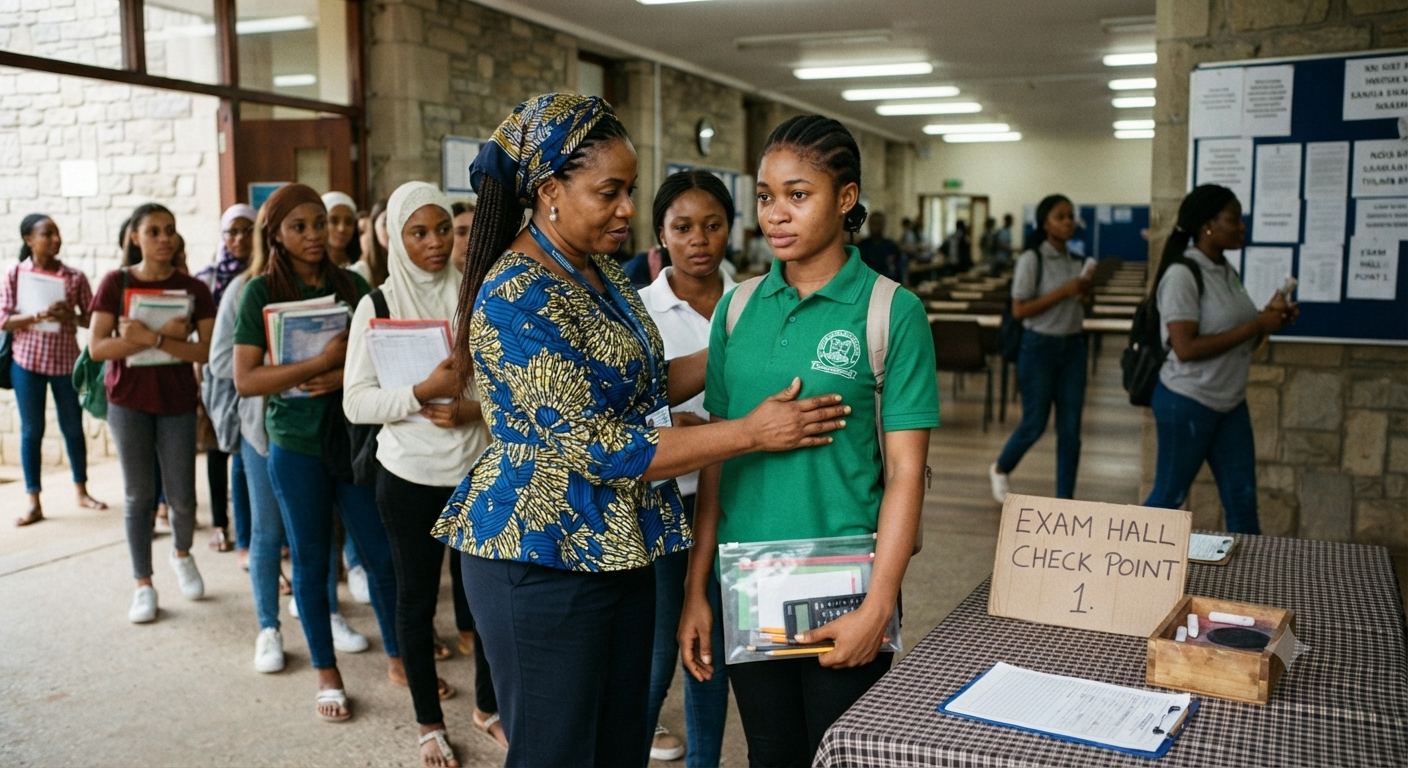
Olabisi Onabanjo University in Ogun State is facing strong public criticism after a video appeared online showing female students being physically checked before they could enter an examination hall.
The checks were said to be for one purpose: to confirm whether the students were wearing bras.
The video was filmed at the university in southwest Nigeria. It showed female staff members touching the chests of female students as they stood in a line and waited to enter the hall for their examinations.
The clip spread quickly across social media. Many people condemned what they saw and questioned why such a physical check was used on students who were already under the pressure of writing examinations.
The moment was not only about a dress code. The students’ bodies were being checked before they could enter an academic space; people believed dignity and personal boundaries were at stake.
At the time the incident was reported, Olabisi Onabanjo University had not released an official statement. The school had not publicly explained who ordered the checks, why that method was chosen or whether it would continue.
However, the President of the Students’ Union, Muizz Olatunji, spoke publicly about the policy behind the incident.
Olatunji defended the university’s dress code. He said the rule was not new and had existed for a long time. According to him, the code was created to encourage modesty and maintain what he described as a “distraction-free environment.”
His defence focused on the reason for the dress code, but he did not fully support the physical method shown in the video. He accepted that the way the rule was enforced needed to change.
Olatunji acknowledged that the university should find more respectful ways to apply the policy. His position separated the dress code from the chest checks; he maintained support for the rule but admitted that the method had become a serious problem.
The incident also drew a sharp response from human rights advocates. They warned that touching students in this way could go beyond school discipline and enter the area of legal rights.
Haruna Ayagi, a senior official with the Human Rights Network, spoke to the BBC about the incident. He said the method used by the university crossed a legal line.
“Unwarranted touches on another person’s body is a violation and could lead to legal action. The university is wrong to adopt this method to curb indecent dressing,” Ayagi said.
His concern was unwanted physical contact. Ayagi argued that having clothing rules does not give a school the right to use any method it chooses.
One student also spoke about the university’s wider approach to clothing and appearance. The student asked not to be named.
According to the student, Olabisi Onabanjo University applies a very strict moral code to how students dress. The student said this strict approach exists even though the university has no religious affiliation.
The student added that learners are often closely examined over their clothing. This suggests that checks on appearance are not seen by students as a rare event, although the method shown in the video brought a new level of public attention.
As criticism grew online, Olatunji responded through the social media platform X. He again said the dress code had existed before the incident and was not created to shame students.
He said the policy was never meant to humiliate anyone. However, the public reaction showed that intention and impact can be different. A rule may claim to protect modesty, but the way it is applied can still leave students feeling exposed or disrespected.
Olatunji said the Students’ Union had been speaking with the university administration about other ways to enforce the rule. He said the union wanted alternatives that were “respectful and dignified.”
Those words are important because the main public concern was not only whether the university could have a dress code. The anger was also about how officials checked the students and whether that method respected their bodies and dignity.
The Students’ Union President also shared the wording of the university’s dress code. The rule bans clothing “capable of making the same or opposite sex to lust after the student in an indecent manner.”
That wording explains the university’s stated concern about modesty. However, it has also placed attention on how the rule is understood, who decides whether clothing breaks it and what methods can lawfully and respectfully be used.
The incident now presents the university with a serious question. A school can ask students to follow rules, but it must also consider how those rules are enforced. Discipline should not remove dignity; and an examination hall should not become a place where students fear unwanted physical checks.
The absence of an official university statement has left several questions unanswered. The public still does not know the full reason for the action, the official procedure behind it or what the administration plans to do next.
Olabisi Onabanjo University has existed for more than four decades. It was established in 1982 as Ogun State University during the government of then-Governor Olabisi Onabanjo.
In 2001, the institution was renamed Olabisi Onabanjo University in honour of the former governor. The school now faces public pressure to address an incident that has drawn attention far beyond its campus.
The video has opened a hard debate about school rules, modesty, consent and human dignity. Olatunji maintains that the dress code is long-standing and was not meant to shame students, while human rights advocates say the physical checks crossed a legal line.
For now, one truth stands at the centre of the anger. Students can be asked to respect school rules; but their bodies, privacy and dignity must also be respected.