

The Power of the Second Chance: Why the Rehabilitation of Agboju Alternative High School is a Win for Every Nigerian Girl
In our society, we are often very quick to judge. If a young girl drops out of school because she got pregnant, or because her family could no longer afford the fees, or because conflict forced her to run from her home, we tend to look at her as someone whose story has ended. We think her time has passed and her potential has dried up. But this is a dangerous and narrow mindset. Education is not a race where you are disqualified just because you tripped and fell in the first lap. It is a lifelong journey, and every person deserves a route back to the path if they ever find themselves wandering away from it.
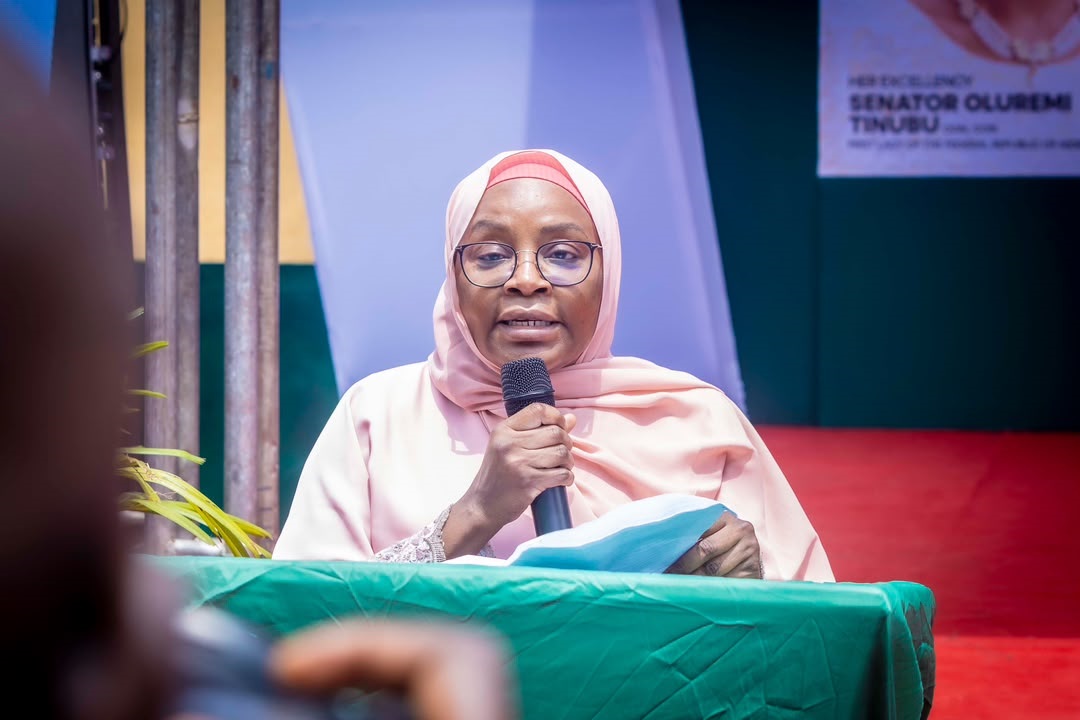
This is exactly why the recent commissioning of the rehabilitated Alternative High School for Girls in Agboju, Lagos State, is such a refreshing and vital piece of news. Dr. Aisha Garba, the Executive Secretary of the Universal Basic Education Commission (UBEC), spoke at the event with a level of clarity and empathy that we need more of in our public discourse. Her message was simple but profound: no Nigerian child's circumstances should stand in the way of their right to a quality education. Every child, regardless of what they have been through, deserves a chance to learn and develop their full potential.
Seeing Beyond the Labels
When we talk about alternative education, we are talking about a lifeline. Dr. Garba pointed out that a girl who dropped out of school should never be seen as a lost cause. Similarly, a young mother who feels the fire to return to her studies should never be told that it is too late for her. For too long, we have allowed the labels of "dropout" or "early mother" to shut doors that should be wide open.
The Alternative High School for Girls exists to erase those labels. It is not just an infrastructure upgrade; it is a renewal of hope. It says to these young women that their dreams still matter. Whether they were held back by poverty, cultural barriers, or personal mistakes, they now have a route back into learning. This is the practical side of the "Renewed Hope" agenda that President Bola Ahmed Tinubu and First Lady Senator Oluremi Tinubu have been advocating for. It moves the conversation from abstract policy to real classrooms where lives are being rebuilt.
More Than Just Four Walls and a Roof
One of the most important points Dr. Garba made was that investment in education must be visible. It should not just be something we read about in dusty reports or see in government figures. It must be seen in the classrooms, in the labs, and in the tools that the students use every day.
The rehabilitation of the Agboju school was comprehensive. It was not just about a fresh coat of paint. The intervention through UBEC’s direct scheme covered academic facilities, furniture, ICT equipment, and vocational tools. Why does this matter? Because a girl returning to school in 2026 needs more than just a blackboard and a piece of chalk. She needs to be digitally literate. She needs access to a laboratory to understand the sciences. She needs vocational tools that can give her a skill she can use to earn a living the moment she walks out of the school gates.
The inclusion of Water, Sanitation, and Hygiene (WASH) facilities is also a massive win. For girls, having clean and private sanitation facilities is a major factor in whether or not they stay in school. It is a practical detail that shows the planners of this project actually thought about the specific needs of the students they are serving.
A Holistic Approach to Learning
Dr. Garba also dropped a hint about the future of this school and others like it. She disclosed that before the end of 2026, UBEC plans to provide a school bus and digital smart boards for the classrooms. This shows a commitment to modernizing these "second chance" centers.
Furthermore, the work is not stopping in Agboju. A second Alternative High School for Girls is already nearing completion in Ikorodu. This is evidence of a systematic expansion of access. If we can have these schools spread across every major district, we can significantly reduce the number of out of school girls in Nigeria. We are creating a system where, if one door closes, another one is standing right there, waiting to be opened.
The Real Measure of Success
We often get caught up in the ceremony of commissioning buildings. We cut ribbons, take photos, and give speeches. But Dr. Garba was very grounded in her assessment of what success actually looks like. She said the true measure of success is not the appearance of the building. Instead, it is the girl who walks through those gates and realizes she still has a future.
Success is the young woman who acquires a vocational skill and starts her own small business. Success is the girl who finds the confidence to lead her community because she is no longer ashamed of her past. Success is when education becomes a tool for transformation rather than just a certificate to hang on the wall. This is a very human way of looking at government intervention. It is about the person, not just the project.
The Role of the Community
Finally, there is a call to action for the people of Agboju. A school is only as strong as the community that supports it. Dr. Garba urged the residents to take ownership of the facility. It is one thing for the government to build and equip a school, but it is another thing for the community to protect it.
We have seen too many cases where government facilities are vandalized or allowed to rot because the locals felt it was "government property" and not theirs. The Agboju community must see this school as their own. They must protect the ICT equipment, maintain the furniture, and, most importantly, encourage the girls in their neighborhood to enroll. If you know a girl who thinks her education is over, it is your responsibility to point her toward this school.
Final Thoughts
The rehabilitation of the Alternative High School for Girls is a bold statement that Nigeria is ready to invest in all its children, not just the ones with perfect records. It is a recognition that life is complicated and that people deserve second chances.
By providing a modern, well equipped, and supportive environment for girls whose education was disrupted, UBEC and the Lagos State Government are doing more than just teaching subjects. They are restoring hope, building confidence, and renewing the future of our nation. As Dr. Garba rightly said, the investment matters because the lives it transforms are the real wealth of Nigeria. Let us hope that the Agboju model becomes the standard for the entire country, ensuring that no girl is ever told it is too late to learn.