

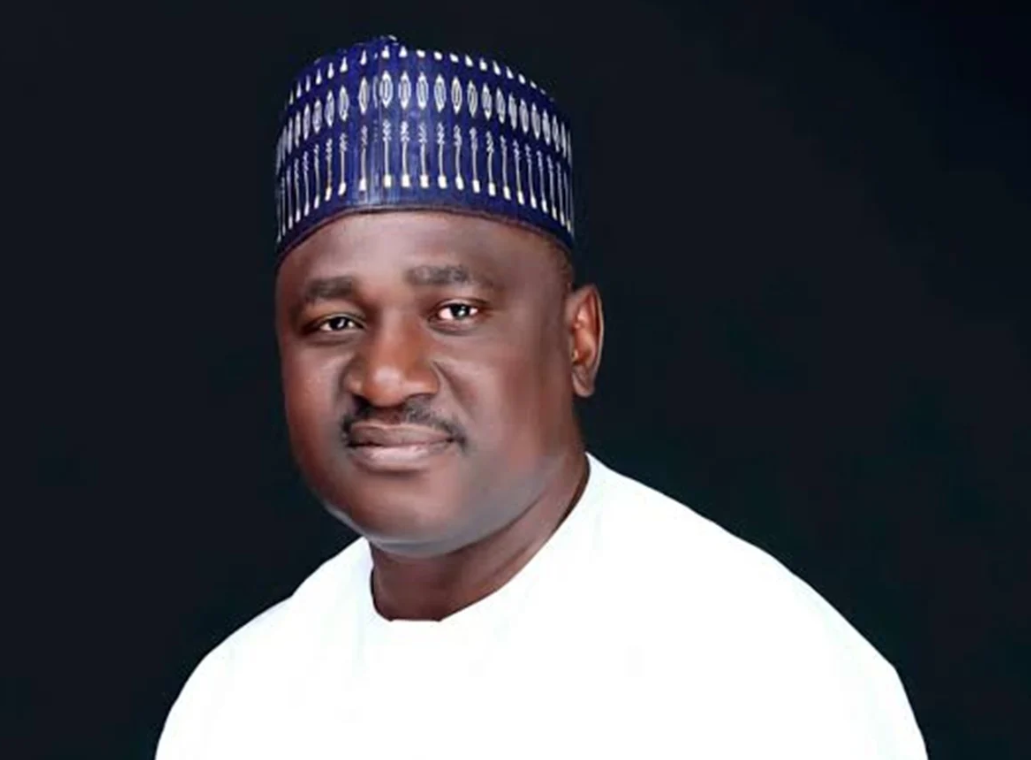
No Alternative to Special Salary Structure for Nigerian Teachers -NUT President
The Nigeria Union of Teachers, NUT, has renewed its call for a special salary structure for teachers across the country, saying better pay and improved welfare are necessary if Nigeria wants to raise the standard of education and restore dignity to the teaching profession.
The NUT President, Comrade Audu Titus Amba, who also serves as Deputy Vice President of the Nigeria Labour Congress, NLC, and Vice President of Education International, African Region, said teachers remain among the most important workers in the country, yet many continue to struggle with poor salaries and inadequate welfare.
Amba made the call while speaking on the welfare of teachers and the challenges facing Nigeria's education system.
According to him, the government has recognised the need to improve teachers' welfare in the past, but several measures that were approved have still not been fully implemented.
Several Teacher Welfare Plans Remain Unimplemented
Amba recalled that the administration of former President Muhammadu Buhari approved a number of incentives aimed at improving the working conditions of teachers.
These included a special salary structure for basic and secondary school teachers, rural teacher allowances, housing support, peculiar allowances for science teachers and other incentives designed to make teaching more attractive.
However, he said most of these measures have yet to become a reality.
The NUT President noted that the major welfare reforms that have been fully implemented include the extension of teachers' retirement age from 60 to 65 years and the increase in their years of service from 35 to 40 years.
While welcoming those changes, he argued that retirement reforms alone cannot address the financial challenges facing teachers.
For many teachers, the bigger concern is how far their salaries can stretch while they are still actively working.
Amba said teachers need better remuneration to plan properly for retirement, provide for their families, access healthcare and maintain decent living conditions.
Teachers Should Not Have to Struggle to Survive
The NUT President said the union has continued to engage the Federal Government and other relevant stakeholders on the need to review teachers' salaries and implement the welfare packages that have already been approved.
He stressed that a special salary structure is no longer something that can simply be treated as an option.
According to him, teachers play a direct role in shaping the country's future, yet many are struggling to meet basic financial responsibilities.
Amba also explained why the NUT has been cautious about taking nationwide industrial action.
He said the union does not want to take decisions that would further disrupt the education of children from poor families who depend heavily on public schools.
However, he warned that continued neglect of teachers could eventually make industrial action unavoidable.
The message is clear: teachers want dialogue and a solution, but they also want the government to understand that welfare cannot continue to be pushed aside.
Insecurity Is Another Threat to Education
Beyond salaries, Amba raised concerns about the growing insecurity affecting schools across Nigeria.
He referred to the abduction of teachers and students in Oriire Local Government Area of Oyo State, an incident that placed the safety of education workers and learners in the spotlight.
According to him, the NUT initially declared an indefinite strike in response to the incident as part of efforts to pressure the authorities to secure the release of the victims.
The decision was not taken lightly, particularly because parents and families were already experiencing enormous emotional pressure.
The union eventually suspended the action after receiving assurances from the government and security agencies.
Amba commended the Federal Government, Oyo State Government, security agencies and community leaders for their efforts, which eventually led to the rescue of the abducted teachers and students after 56 days in captivity.
However, the outcome also came with tragedy.
Two teachers reportedly lost their lives during the ordeal, leaving behind families, colleagues and students affected by the incident.
For Amba, their deaths highlight the difficult conditions under which some Nigerian teachers are expected to work.
Nigeria Cannot Ignore School Security
The NUT President pointed to previous attacks on Nigerian schools, including the Chibok and Dapchi abductions, as evidence that school insecurity is not a new problem.
When teachers and students are afraid of being attacked or kidnapped, the consequences extend beyond the immediate victims.
Parents may become reluctant to send their children to school, teachers may be unwilling to accept postings to certain communities and learning itself can be disrupted.
Amba therefore called for stronger protection of schools across the country.
He stressed that providing quality education means little if students and teachers cannot safely enter the classroom.
What Nigeria Can Learn From Finland
Amba also pointed to Finland as an example of how a country can build a strong education system by investing in teachers.
He argued that Nigerian policymakers need to look beyond curriculum changes and recognise the importance of teachers in determining educational outcomes.
In Finland, teachers are generally regarded as highly trained professionals, and the profession enjoys considerable respect.
Amba believes Nigeria can learn from that approach by improving teacher training, remuneration and professional development.
He appealed to President Bola Ahmed Tinubu to give greater attention to basic education and focus on the three areas he considers particularly important: teachers, infrastructure and training.
His argument is straightforward. If teachers are the people responsible for turning education policies into classroom realities, then they must be properly prepared and supported to do the job.
Curriculum Reform Must Include Teachers
The debate around Nigeria's education system has also raised concerns about outdated curricula and graduates who may lack the practical skills required by today's economy.
Amba acknowledged the need for curriculum reform but warned that changing documents alone will not solve the problem.
The NUT participated in recent curriculum reviews, which introduced more practical and skills-based approaches to learning.
However, Amba insisted that teachers must be involved in education policy discussions because they are the ones expected to implement new policies in actual classrooms.
A curriculum may look excellent on paper, but its success ultimately depends on what happens when a teacher walks into a classroom.
If teachers lack training, motivation, teaching materials or adequate facilities, even the best-designed curriculum may struggle to achieve its objectives.
A Minimum Salary Standard for Teachers
Amba also called for the Federal Government to establish a minimum salary benchmark specifically for teachers.
Although education is on the concurrent legislative list, he argued that the Federal Government still has an important role to play in establishing national standards.
He compared the proposed approach to the national minimum wage, saying there should be a minimum level below which teachers should not be paid.
Such a standard, he suggested, should apply across public and private schools, with states and private institutions expected to meet the established benchmark.
This, he believes, would help address some of the disparities in teachers' pay across the country.
Protecting Schools Requires Everyone's Support
On the issue of school security, Amba called for greater cooperation between government, security agencies, teachers, parents and local communities.
He noted that many attacks on schools are intelligence-driven and said communities have an important role to play in providing information that could help security agencies prevent attacks.
He also commended initiatives such as the Safe School Initiative in Oyo State, while calling for similar efforts to be strengthened and expanded across Nigeria.
The Bigger Picture
The NUT's concerns ultimately point to a larger issue: Nigeria cannot build a strong education system without taking care of the people responsible for delivering it.
Better salaries alone will not solve every problem in education. Schools also need proper infrastructure, teaching materials, training, technology and security.
But teachers remain at the centre of all these efforts.
A well-designed curriculum needs a competent teacher to deliver it. A newly built classroom needs a teacher to use it effectively. A digital education programme needs trained teachers who can bring the technology into the learning process.
That is why Amba's call for better pay and welfare goes beyond a demand for improved salaries.
It is a call for Nigeria to treat teaching as a profession that deserves investment, respect and protection.
If the country wants better learning outcomes and a stronger workforce in the future, the foundation has to begin with the people standing in today's classrooms.