

Nigerian universities post strongest-ever global rankings
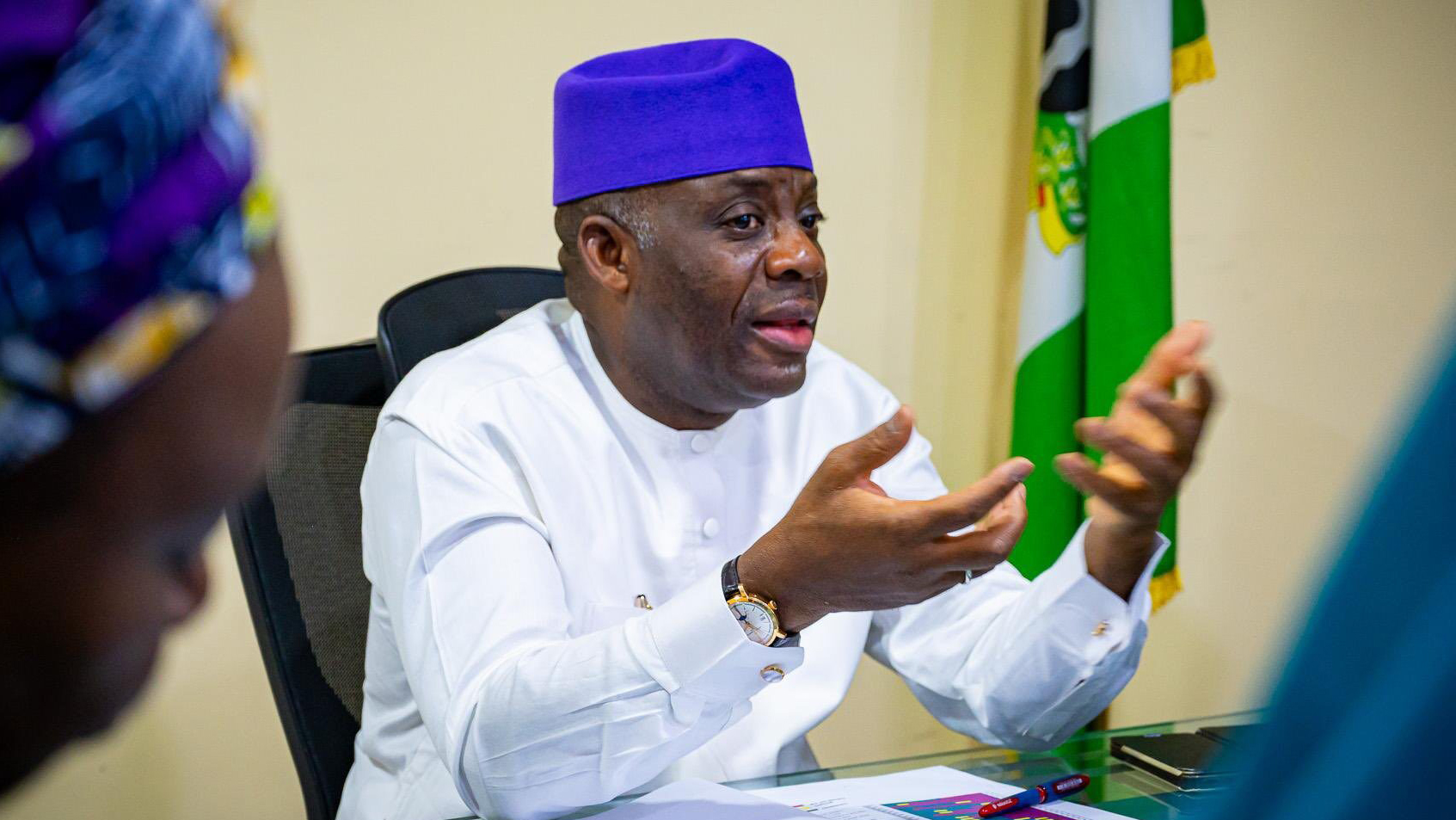
The Education Minister, Dr. Tunji Alausa, announced that 24 Nigerian universities made the 2026 Times Higher Education World University Rankings, up from 21 the previous year, making Nigeria the most represented country in Sub-Saharan Africa. He noted 17 of the ranked institutions are federal universities, calling it evidence that the sector's reforms are working.
For years, conversations about Nigerian universities have often centred on what is not working. From funding challenges and inadequate facilities to strikes, overcrowded classrooms and limited research opportunities, there has been plenty to worry about.
But there is also another story worth telling.
Nigerian universities are beginning to make a stronger impression internationally. In the 2026 Times Higher Education (THE) World University Rankings, 24 Nigerian universities were included, up from 21 in the previous year. That makes Nigeria the most represented country in Sub-Saharan Africa in this year's ranking.
It may sound like just another education statistic, but it is an encouraging development for a country with one of the largest and youngest populations in Africa.
The Minister of Education, Dr. Tunji Alausa, welcomed the result and described it as a sign that reforms in Nigeria's education sector are beginning to have an impact. He also pointed out that 17 of the 24 universities are federal institutions, suggesting that the country's public universities are making progress alongside their private counterparts.
So, which universities made the list, and what does this actually mean for Nigerian students?
The Universities Leading the Way
At the top of the Nigerian list are two familiar names: the University of Ibadan and the University of Lagos.
Both universities were placed in the 801–1000 global ranking band, making them Nigeria's joint-highest-ranked universities in the 2026 THE rankings.
For the University of Ibadan, the recognition adds to its long-standing reputation as one of Nigeria's leading academic and research institutions. As the country's oldest university, UI has produced generations of academics, doctors, professionals, researchers and other leaders.
The University of Lagos has also remained one of Nigeria's most prominent universities. Its location in Lagos, combined with its academic programmes, research activities and connections with industry, gives it a unique position within the country's university system.
Next on the Nigerian list are Bayero University, Covenant University and Landmark University, all placed in the 1001–1200 global band.
The presence of Covenant and Landmark is particularly interesting because it shows that Nigeria's growing international visibility is not limited to federal universities. Private universities are also becoming increasingly competitive and visible.
More Universities Are Getting Recognition
Five other Nigerian universities were placed in the 1201–1500 band. They are Ahmadu Bello University, Federal University of Technology Minna, University of Ilorin, University of Jos and University of Nigeria, Nsukka.
Then there are 14 universities in the 1501+ band. These include Babcock University, Delta State University, Ekiti State University, Federal University of Agriculture Abeokuta, Federal University of Technology Akure, Federal University of Technology Owerri, Federal University Oye-Ekiti, Ladoke Akintola University of Technology, Lagos State University, Nnamdi Azikiwe University, Obafemi Awolowo University, University of Benin, University of Calabar and University of Port Harcourt.
One thing students should understand about these figures is that THE does not give every university an exact position. Instead, institutions are grouped into ranking bands. So, for example, being in the 801–1000 band does not mean one university is exactly 801st while another is exactly 802nd.
The bands simply show the broad level at which universities are performing internationally.
But What Do University Rankings Really Tell Us?
It is easy to look at a university ranking and immediately decide that the university at the top must be better at everything. That is not necessarily the case.
University rankings use different methods, and Times Higher Education looks at areas including teaching, research, knowledge transfer and international outlook.
That means a university's position reflects several aspects of its overall performance. However, it does not tell the whole story.
For a student choosing a university, the ranking should be one consideration among many.
For example, if you want to study Computer Science, you should look beyond the university's overall position and find out how strong its Computer Science programme actually is. The same applies to Medicine, Engineering, Law, Business, Agriculture and other fields.
Students should also consider accreditation, lecturers, facilities, tuition costs, location, student support and opportunities for internships or practical experience.
A university may not have the highest overall ranking but could still offer an excellent programme in a particular field.
What Does This Mean for Students?
Perhaps the biggest question is whether these rankings will make a difference to the everyday experience of Nigerian students.
The answer is that they can, but only if universities continue to build on the progress.
A university that takes research seriously can create more opportunities for students to participate in research projects. Better international partnerships can expose students to new ideas and academic networks. Improved digital infrastructure can make learning resources easier to access.
But students cannot simply sit back and expect the university's reputation to do the work for them.
Students still need to read, practise, ask questions, revise and develop skills outside their regular lectures.
This is especially important because passing examinations and being prepared for the workplace are not always the same thing. Students need to understand what they are learning and know how to apply that knowledge.
That is one of the reasons accessible learning resources such as La-Net Hub can be useful alongside formal education. Students can revisit topics they covered in class, practise questions and spend more time on subjects they find difficult.
Instead of waiting until examination week before opening their notes, students can build a habit of regular revision throughout the semester.
There Is Still a Long Way to Go
The latest rankings are encouraging, but they should not be mistaken for proof that everything is now perfect in Nigerian higher education.
There are still serious challenges. Many universities need better infrastructure, stronger research funding, improved laboratories, modern libraries and reliable digital resources. Academic staff also need the support and working conditions required to teach and conduct research effectively.
The real challenge now is maintaining the progress.
It is one thing for 24 universities to appear in a global ranking. It is another thing for more Nigerian universities to move into higher bands over the next few years.
That will require consistency. Reforms cannot be something that happens for a year or two and then disappears. Universities need sustained investment, while policymakers need to keep paying attention to the quality of education students receive.
A Positive Sign for Nigerian Education
For now, however, there is plenty to be encouraged by.
Nigeria has increased its representation in the Times Higher Education World University Rankings from 21 universities to 24, making it the most represented country in Sub-Saharan Africa. Seventeen of those universities are federal institutions.
That is worth paying attention to.
The rankings do not mean Nigerian universities have suddenly become perfect, nor do they mean students should choose a university based on its ranking alone. What they do show is that Nigerian institutions are gaining greater visibility and that progress is possible.
For students, this is a reminder that quality education and opportunity can be found within Nigeria. It is also a reminder that students themselves have a role to play.
The university provides the environment, lecturers and resources, but students have to make use of them. Developing good study habits, revising consistently, practising questions and learning beyond the classroom can make a huge difference.
The 2026 rankings are therefore more than a list of university names. They represent a small but important step forward for Nigerian higher education.
There is still plenty of work to do, but perhaps that is exactly why this achievement matters.
For once, the conversation about Nigerian universities is not only about the problems. It is also about progress — and the possibility of doing even better.