

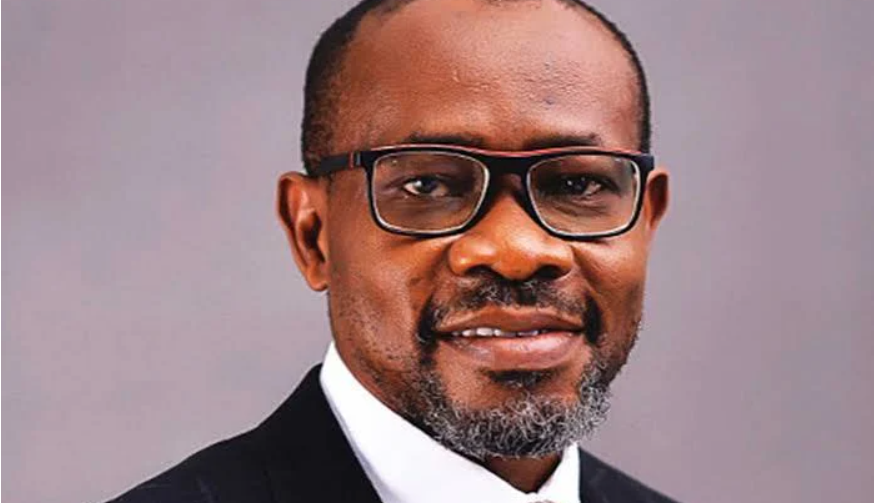
Nigerian Economist Urges African Scholars to Develop Homegrown Economic Theories
A Professor of Economics at Lagos Business School, Bongo Adi, has asked African academics to stop depending mainly on economic theories created in Western countries. He wants them to build new theories from the real lives, problems and opportunities found across Africa.
Adi said Africa has its own history, systems and economic conditions. Because of this, theories created for other parts of the world may not fully explain what happens on the continent. African scholars must study their own environment deeply and produce ideas that speak clearly to it.
He made the call while giving the 23rd inaugural lecture of Pan-Atlantic University. The lecture was held at the university’s Lekki campus in Lagos.
The title of the lecture was “The End of Development Economics: A Manifesto for Post-Industrial Policy.” Through the lecture, Adi called for a new way of thinking about economics and making policies in Africa.
His message was a demand for intellectual independence. Africa should not only borrow ideas and hope they solve every local problem. Its academics should create original theories that begin with African realities.
Adi criticised a common pattern in economic research. African researchers often gather and provide the data. They study communities, record economic activities and present information from the continent. Yet scholars in developed countries often build the main theories used to explain that same information.
In this pattern, Africa supplies the facts, while someone outside Africa decides what the facts mean. Adi believes African scholars must also create the ideas used to understand their continent.
The economist asked African researchers to move beyond foreign frameworks. A widely accepted theory may not answer every African question. Scholars should first examine whether each model truly fits the problem.
He also wants African academics to create ideas that respond to the continent’s special challenges and opportunities. Africa faces difficult development questions, but it is also full of people creating new ways to work, trade, build and solve problems. Economic thinking should see both sides.
Adi said the future of development economics should give African researchers greater intellectual independence. They should be able to think freely, challenge old beliefs and create solutions that can guide practical policies.
He called for ideas that can move from the university into real policy. He wants research to do more than fill journals or remain inside lecture halls. It should help leaders understand problems and choose actions that work in African societies.
He placed a special responsibility on younger scholars. He encouraged them to question existing approaches instead of accepting every established theory as final.
Young researchers should ask hard questions. They should examine old ideas, show where those ideas fail and offer new views. Adi does not want them to only make small changes to theories created by others.
Creating a theory requires research, evidence and courage. Adi’s message was clear; African academics must see themselves as creators of knowledge, not only users of knowledge.
He also spoke about the speed of technological change. Artificial intelligence and automation are changing the global economy, and the change is happening quickly.
These technologies are reshaping work, business and economic growth. Plans made for an older world may not be enough for an economy changed by artificial intelligence and automation.
Africa must therefore rethink its approach to growth and development. The continent cannot plan its future as though technology has remained still. It must study what these changes mean for its people and build economic ideas that respond to the new reality.
Adi pointed to the work already happening across Africa. “Across Africa, a generation of entrepreneurs, engineers and creative workers is building economic futures that no textbook predicted,” he said.
The statement carries hope and a warning. Africans are already creating and solving problems; yet old textbooks may not fully explain what they are building.
Entrepreneurs are testing new business paths. Engineers are building solutions, while creative workers are shaping new forms of value. Their work may not follow the exact path described in older economic models, but it is still creating a future.
Adi’s argument is that economic theory should catch up with this living reality. Scholars should study what is emerging and build ideas around it. The textbook should learn from Africa; Africa should not always be forced to fit inside the textbook.
The Vice-Chancellor of Pan-Atlantic University, Prof. Enase Okonedo, praised the inaugural lecture. She described it as a chance for scholars and policymakers to think again about development strategies for the modern economic era.
Her response showed the wider importance of the discussion. The call is not only for economics professors. Policymakers also need to reconsider the ideas behind their decisions as the world enters a new period shaped by technology and changing forms of work.
Okonedo also highlighted Adi’s work in several areas. These include economics, development policy, public-private partnerships, project finance, competitiveness and public sector reform.
She described him as an influential voice in discussions about Africa’s economic future. His work across these fields has placed him inside important debates about how African countries can grow, govern and respond to change.
The heart of Adi’s lecture was simple but powerful. Africa must not remain only a subject that other people study and explain. Its scholars must gather the evidence, create the theories and help shape the policies.
Foreign models may still offer lessons, but they should not be treated as the only source of truth. Africa’s future needs ideas born from African realities; and African academics must have the confidence to create them.