

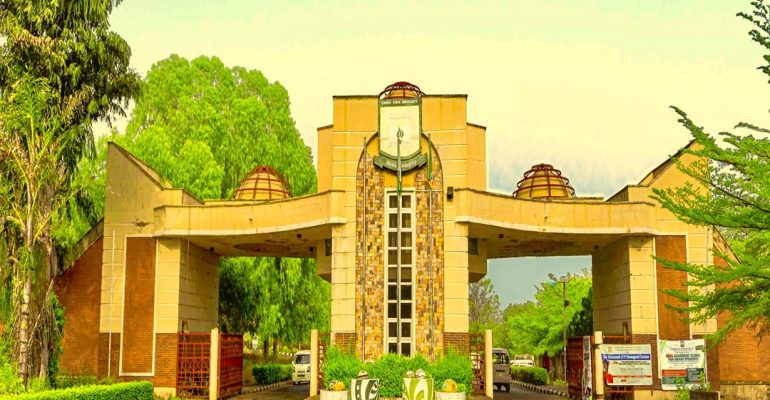
KWASU Relocates Staff, Students From Satellite Campus Over Insecurity
Kwara State University, KWASU, has asked students and staff at its Ilesha-Baruba satellite campus to relocate to the main campus in Malete following growing security concerns around the area.
The university said the move is temporary and was taken to keep members of the campus community away from possible danger while the security situation is being watched.
The Director of University Relations, Saeedat Aliyu, confirmed the decision in a statement. She said members of the university management travelled to the Ilesha-Baruba campus in Baruten Local Government Area to speak directly with the students and staff affected by the relocation.
Those leaving the campus were advised to carry only important belongings for now. KWASU said it is already working on accommodation arrangements that will allow them to settle in a safer environment while they remain in Malete.
The decision did not come without an earlier check of the campus.
Vice-Chancellor Shaykh-Luqman Jimoh visited Ilesha-Baruba on November 30 and looked at the condition of the facilities as well as the welfare of students and staff. The relocation followed that visit.
For now, there is no date for reopening the satellite campus.
The university said normal academic activities there will only return when the security situation has improved enough for people to live and work in the area without unnecessary risk.
The concern around Ilesha-Baruba is also coming at a difficult time for Kwara State.
Several parts of the state have faced growing cases of banditry, kidnapping and violent crime in recent weeks, forcing the government and security agencies to take a number of emergency steps.
In November, the Kwara State Government shut schools in Ifelodun, Ekiti, Irepodun, Isin and Oke Ero local government areas.
The closure came after gunmen attacked a Christ Apostolic Church in Eruku, Ekiti Local Government Area, on November 18. People were killed in the attack, and the incident increased fear in surrounding communities.
Since then, security concerns around schools have become harder to ignore.
Officials have raised fears that armed groups moving through some parts of the state could use schools as escape points or take advantage of students during attacks. There have also been concerns that students could be used as human shields if armed groups are cornered during security operations.
That possibility has forced authorities to become more careful about keeping schools open in places where armed groups may be active.
The response has gone beyond school closures.
On November 25, the presidency ordered a full security cordon around forest areas in Kwara State as part of efforts to stop armed groups from moving freely through the region.
The Nigerian Air Force was directed to carry out continuous aerial surveillance over the affected areas. Ground troops are also working alongside the Air Force as security agencies try to locate and deal with armed groups hiding in forests and other difficult areas.
The security operation is expected to run day and night.
Against that background, KWASU decided that keeping students and staff at Ilesha-Baruba was a risk the university was no longer willing to take.
The move will disrupt normal life for those affected. Students will have to adjust to a different campus. Staff members will also have to move their work to Malete, while the university tries to sort out accommodation and other basic needs.
Still, management appears to have decided that the disruption is better than keeping people in an area where the security situation may worsen without warning.
The university has not said that the Ilesha-Baruba campus is being closed permanently.
Its position is that the relocation will last only for as long as necessary.
Once the area is considered safe again, academic activities can return.
How soon that happens will depend largely on the wider security situation in Baruten and other parts of Kwara State.
The university is therefore watching a problem that is much bigger than the campus itself.
Banditry and kidnapping have already forced the state government to close schools elsewhere. Security agencies are carrying out operations in forests. The presidency has ordered stronger action, and communities in some parts of the state are living with more fear than usual.
KWASU's response has been to remove its own students and workers before the situation gets worse.
Aliyu said the university wants those affected to move with only what they need immediately while arrangements are made for safer accommodation.
That suggests the relocation was organised quickly and with safety as the first concern.
For students, the situation may be frustrating. Some may have already settled into life at Ilesha-Baruba and now have to move again, adjust to another environment and continue their studies away from the campus they are used to.
Staff members face the same disruption.
But university management has made its position clear. Academic convenience cannot come before security when there is a real threat around the area.
The Ilesha-Baruba campus will therefore remain without its normal student and staff population until the university is satisfied that returning there is safe.
In the meantime, Malete will take in those affected.
The wider security operation across Kwara State will continue, while the university waits to see whether conditions improve enough for the satellite campus to reopen.
For now, there is no promise of a quick return.
There is only a temporary move, a search for safer accommodation, and a university trying to keep its people away from a security problem that has already forced stronger action across several parts of the state.