

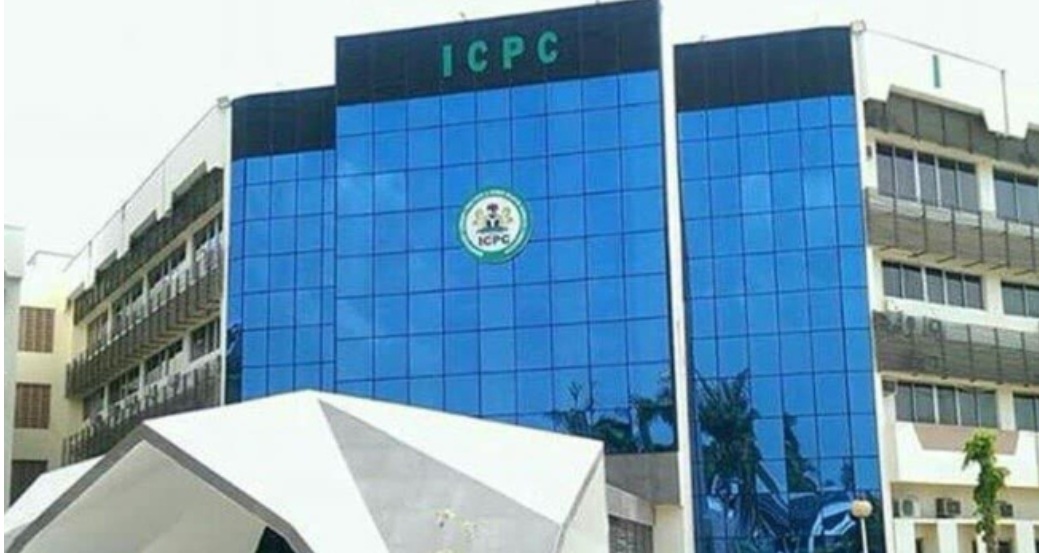
ICPC Uncovers 908 Ghost Workers, Recovers ₦942 Million in Payroll Fraud Investigation
The Independent Corrupt Practices and Other Related Offences Commission, ICPC, has uncovered 908 ghost workers across at least 50 federal Ministries, Departments and Agencies, MDAs, in an investigation that has led to the recovery of approximately ₦942 million in fraudulent salary payments.
The discovery has once again raised questions about the management of Nigeria's public payroll system and how individuals who are not genuine government employees were able to receive salaries from public funds.
According to the anti-corruption agency, the investigation began in 2024 after officials noticed irregularities connected to pension payments.
What started as an investigation into pension-related issues eventually revealed wider problems within the federal payroll system, including the alleged insertion of fictitious names into the government payroll.
The ICPC said some of the individuals receiving salaries were not legitimate government workers.
How the Investigation Started
The investigation was launched after authorities identified unusual patterns in pension payments.
As investigators went deeper into the records, they discovered what appeared to be irregularities involving government employees and payroll records.
The ICPC subsequently expanded the investigation, eventually identifying hundreds of names that were allegedly receiving government salaries despite not being genuine employees.
The agency said the investigation covered at least 50 federal MDAs.
The scale of the discovery has drawn attention because the federal government relies heavily on its payroll systems to process salaries and other personnel-related payments for thousands of workers across the country.
If fictitious employees can be added to the system, public funds can potentially be lost without immediately raising suspicion.
908 Ghost Workers Identified
ICPC Chairman Musa Aliyu disclosed the findings while explaining the outcome of the investigation.
According to him, investigators identified 908 ghost workers who had been placed on the federal payroll.
These were individuals who allegedly did not have legitimate employment relationships with the government but were still receiving salary payments.
The investigation found that the fraudulent payments amounted to about ₦942 million.
The recovered money represents funds that could otherwise have been used for public services, including education, healthcare, infrastructure and other government programmes.
For a country dealing with significant financial pressures and competing demands for public resources, the recovery highlights the importance of ensuring that government funds reach their intended destinations.
How Did the Ghost Workers Get Onto the Payroll?
One of the major concerns raised by the investigation is the alleged manipulation of the Integrated Payroll and Personnel Information System, IPPIS.
IPPIS was introduced to help the government manage its workforce and payroll more efficiently.
The system was designed to provide a centralised way of managing employee information and salary payments.
However, according to the ICPC, the investigation uncovered weaknesses that allegedly allowed fictitious names to be inserted into the system.
The commission said some senior public officials allegedly used these weaknesses to add the names of relatives and associates to the federal payroll.
The people allegedly added to the payroll were not genuine government employees, yet salaries were reportedly processed for them.
The money was then allegedly diverted for personal use.
These findings suggest that while digital payroll systems can reduce certain forms of fraud, technology alone cannot eliminate corruption.
There must also be strong verification, monitoring and accountability mechanisms around the system.
Why Ghost Workers Are a Serious Problem
Ghost worker fraud is not new in Nigeria.
For years, governments at different levels have struggled with situations where salaries are paid to people who do not actually work for the government.
The problem may appear straightforward, but its impact can be significant.
Every naira paid to a fictitious worker represents money that cannot be used for another public purpose.
For example, hundreds of millions of naira lost through fraudulent salaries could potentially support school projects, provide learning materials, improve healthcare facilities or fund other essential services.
This is why payroll management is not simply an administrative issue.
It is directly connected to the quality of public services Nigerians receive.
What the Investigation Says About IPPIS
The ICPC's findings have also raised questions about the effectiveness of existing controls within IPPIS.
The system was created partly to address problems associated with public sector payroll management.
However, if individuals can manipulate records or insert names that do not correspond to real employees, then additional safeguards are clearly needed.
The ICPC chairman said the investigation highlighted the need for stronger oversight and reforms within the federal payroll system.
Such reforms could involve more frequent verification of government employees, stronger checks before new names are added to payroll and better coordination between agencies responsible for recruitment, personnel records and salary payments.
The government may also need to improve the way information is cross-checked across its various databases.
The Role of Senior Officials
Another worrying aspect of the investigation is the allegation that some senior public officials were involved in inserting the names of relatives and associates into the payroll.
If established in court, such actions would represent a serious abuse of public office.
Government officials are entrusted with public resources and are expected to act in the interest of the country.
Using government payroll systems to create financial benefits for people who are not genuine employees undermines public trust and puts additional pressure on taxpayers.
The ICPC has said efforts are ongoing to ensure that those allegedly involved are held accountable in accordance with the law.
This will be an important part of the process.
Recovering stolen or fraudulently obtained funds is necessary, but accountability is equally important if the government wants to discourage similar practices in the future.
What Happens Next?
The ICPC has reaffirmed its commitment to investigating corruption and recovering public resources.
The commission is also expected to continue examining the circumstances surrounding the fraudulent payments and identifying individuals who may have benefited from the alleged scheme.
For those found to have participated in the fraud, the appropriate legal process will determine what penalties they may face.
The recovery of approximately ₦942 million is significant, but the larger objective should be preventing the same weaknesses from being exploited again.
A payroll system that is difficult to manipulate would save government money while also improving confidence in the management of public funds.
Why Nigerians Should Pay Attention
For the average Nigerian, a case involving government payroll may seem distant from everyday life.
But the consequences are very real.
Government revenue is used to provide services that millions of Nigerians depend on.
When public money is lost through fraud, governments have fewer resources available to meet those responsibilities.
This is particularly important in sectors such as education, where funding shortages can affect classrooms, teachers, school infrastructure and learning materials.
The recovery of ₦942 million therefore represents more than just a financial figure.
It is money that belongs to the public.
The real question is how many other weaknesses remain undetected and whether authorities can prevent similar losses in the future.
A Reminder That Technology Needs Oversight
The ICPC investigation also offers an important lesson about digital systems.
Moving government processes from paper to digital platforms can improve efficiency, but technology is only as reliable as the systems and people managing it.
Strong databases need strong verification.
Automated payments need human oversight.
And officials responsible for managing public systems must be held accountable when those systems are abused.
The discovery of 908 ghost workers shows that digitisation alone is not enough.
The government will need to continue strengthening its payroll systems, regularly verify employee records and close loopholes that can be exploited for personal gain.
For now, the ICPC's investigation has recovered about ₦942 million and exposed alleged irregularities involving 908 ghost workers across at least 50 federal MDAs.
The development is a significant reminder that protecting public funds requires constant monitoring.
For Nigerians, the hope is that the investigation will not end with the recovery of money, but will also lead to stronger systems that make it much harder for ghost workers and fraudulent payroll schemes to survive in the first place.