

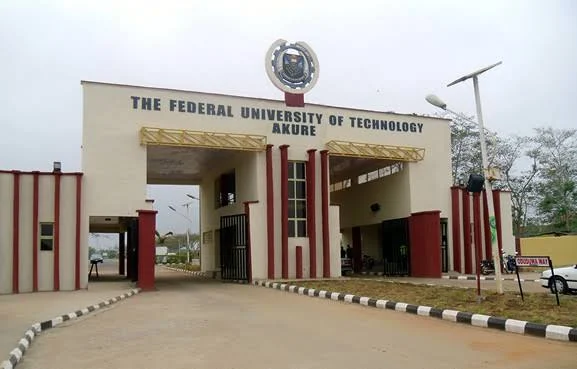
FUTA Urges Nigerian Universities to Prioritise Quality Over Quantity.
The Federal University of Technology, Akure, FUTA, has warned Nigerian universities against chasing large student numbers while quality keeps falling. The university said higher institutions should pay more attention to the kind of graduates they produce and stop acting like places that simply collect students, issue certificates, and move on.
The warning came on Thursday at FUTA's 15th Registry Annual Lecture. The lecture was delivered by Hope Eghagha, a Professor of English Literature and Literary Analysis at the University of Lagos. He spoke on the theme, "Quality or Quantity: Rethinking Higher Education Administration in the 21st Century."
His message was hard to miss.
Eghagha said Nigerian universities need to judge their success by the quality of the people they send into the world. Large graduation figures may look impressive on paper, but numbers alone do not show whether students actually learned enough, gained useful skills, or became strong professionals.
He said universities in Nigeria should focus on producing graduates who can compete anywhere and perform well in the real world.
The pressure to admit more students, graduate more people, and keep pushing numbers upward can easily become dangerous when standards are ignored. Eghagha warned that universities must not become "degree mills", where certificates keep coming out but real knowledge, skill, discipline, and ability are weak.
That warning cuts straight into one of the biggest fears around higher education today.
A university degree is supposed to mean something. It should show that the person holding it has gone through proper learning, serious training, and real academic work. It should carry weight. It should tell an employer, another university, or the public that the graduate has earned the qualification and can defend it with knowledge and skill.
Eghagha said every certificate should reflect real expertise, innovation, and character.
That means universities have to look beyond enrolment figures and ask harder questions. Are students learning properly? Are lecturers well supported? Are courses being checked seriously? Are facilities strong enough? Are graduates leaving school with useful skills? Can they solve problems? Can they think? Can they compete outside Nigeria?
Those questions matter more than simply announcing that tens of thousands of students have been admitted or graduated.
Eghagha called for stronger funding, strict accreditation, and better capacity building. He argued that these areas deserve more attention than uncontrolled growth in student numbers.
The point was simple. If a university keeps admitting more people without enough lecturers, classrooms, laboratories, equipment, libraries, offices, or proper systems, something will suffer.
Usually, quality suffers first.
More students can mean overcrowded classrooms. It can mean tired lecturers. It can mean weak supervision, poor access to equipment, and students passing through programmes without getting the full training those programmes were designed to give.
That is why he pushed for a more serious approach to growth.
Universities can expand, but expansion has to come with the money, staff, planning, facilities, and academic control needed to support it. Otherwise, the whole system becomes a race for numbers.
And numbers can deceive.
A school can boast about how many people it graduated, but the real test begins when those graduates step outside the campus.
Can they do the work?
Can they think for themselves?
Can they solve real problems?
Can they stand beside graduates from other countries and compete without fear?
That is the standard Eghagha wants Nigerian universities to take more seriously.
The lecture also touched on the administrative side of university life. FUTA Registrar, Charles Adeleye, appealed to alumni, corporate bodies, and other well-meaning individuals to support the university's registry.
He said the registry does a lot of work behind the scenes to keep the university running properly. Records have to be kept. Processes have to move. Students and staff need answers. Documents have to be handled. Administrative systems must work every day, even when nobody outside the office sees the effort behind them.
Adeleye said outside support would help the registry respond better to the changing demands of university administration.
That support, he said, could help strengthen service delivery and make the registry more effective.
The message was practical because a university does not run on lectures alone.
Administrative work holds many parts of the institution together. When the system is weak, delays spread quickly. Students suffer. Staff get frustrated. Records become difficult to manage. Basic processes become slow.
So, while the lecture focused strongly on academic quality, the event also made room for the machinery that keeps the university working.
FUTA Vice-Chancellor, Prof. Adenike Oladiji, also spoke at the event. She said the university remains committed to becoming a world-class university of technology.
According to her, FUTA will keep pushing for excellence in teaching, research, and service delivery.
She also said the university would continue to engage seriously with issues affecting higher education in Nigeria.
That matters because the problems facing universities are not small.
Funding is under pressure. Student numbers keep growing. Facilities often struggle to keep up. Employers complain about skills. Students want better learning. Lecturers need stronger support. The system is carrying heavy weight from many sides at once.
FUTA's message at the lecture was therefore strong and direct.
Universities must stop treating size as the main sign of success.
A bigger student population can look powerful, but it means very little if the quality of learning becomes weak. A long list of graduates means little if too many of them leave school without the skill expected from the degree they carry.
The value of a university should show in its people.
It should show in the quality of its teaching, the strength of its research, the skill of its graduates, and the seriousness of its standards.
That is the fight Eghagha placed at the centre of the lecture.
He called for universities that train people properly, protect standards, build capacity, and make sure certificates still carry meaning.
FUTA also used the event to restate its own position. The university says it wants to improve teaching, research, administration, and service delivery while continuing to take part in difficult conversations about the future of higher education in Nigeria.
The warning against "degree mills" therefore landed with force.
Nigeria does not only need more graduates.
It needs graduates who are ready.