

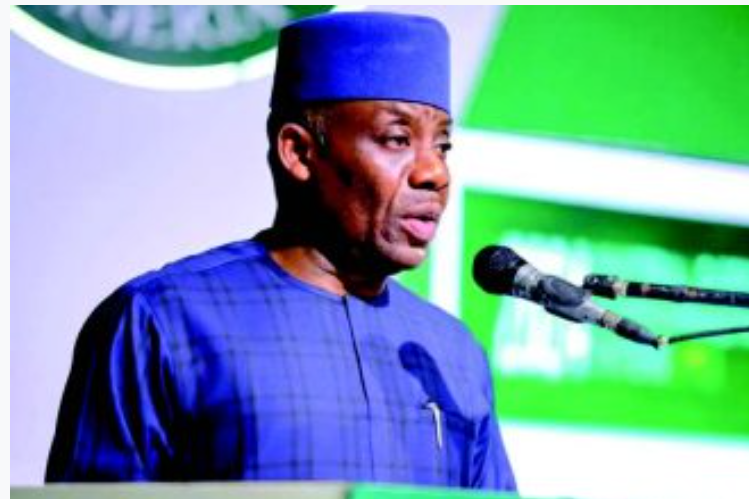
FG rolls out $552m World Bank-backed education programme
Nigeria Launches $552M HOPE-EDU Programme to Transform Basic Education Nigeria has taken a major step towards addressing some of the long-standing challenges facing basic education with the launch of a $552 million education programme designed to improve learning outcomes and expand access to quality schooling across the country.
Known as HOPE-EDU, the programme was officially unveiled by President Bola Ahmed Tinubu in Abuja on Thursday, July 16, 2026. It forms part of a wider set of initiatives under the administration's Renewed Hope Agenda, all aimed at tackling poverty, strengthening human capital and improving essential public services.
For millions of Nigerian children, the success of the programme could have a direct impact on something as basic—and as important—as whether they can attend school, learn effectively and acquire the skills they need for the future.
What Exactly Is HOPE-EDU?
HOPE-EDU stands for Human Capital: Opportunities for Prosperity and Equity in Education.
The programme is being co-financed by the World Bank and the Global Partnership for Education (GPE) and represents the education component of a much larger $3.05 billion package covering education, healthcare, community resilience and governance.
At its core, HOPE-EDU is focused on improving the quality of basic education in Nigeria. Rather than concentrating on only one area, the programme takes a broader approach, looking at what happens inside classrooms as well as how the education system is managed.
According to the Minister of Education, Dr. Maruf Tunji Alausa, the programme is designed to strengthen foundational literacy and numeracy, improve teaching quality, increase access to quality basic education and make greater use of digital technology in education planning and management.
That combination is important.
A child cannot benefit fully from attending school if they are not developing basic reading, writing and numeracy skills. At the same time, teachers need the right training and resources to help students learn, while education authorities need reliable information to know where problems exist and how resources should be distributed.
HOPE-EDU is intended to address all of these areas.
Millions of Students and Teachers Expected to Benefit
The size of the programme is one of the things that immediately stands out.
Officials say HOPE-EDU is expected to directly reach nearly 29 to 30 million children in public schools, as well as more than 500,000 public primary school teachers.
The programme will also cover approximately 65,000 public schools and 10,000 non-formal learning centres across Nigeria.
Those numbers give an idea of the scale of what the government is attempting.
Nigeria's education system is enormous, with schools and learners spread across urban centres, rural communities and areas where access to education remains difficult. Reaching such a large number of students will not be simple.
But if implemented effectively, the programme could have an impact far beyond individual classrooms.
Why Basic Education Needs Attention
Nigeria has made progress in expanding access to education, but serious challenges remain.
The country continues to have one of the world's largest populations of out-of-school children. For families facing financial hardship, insecurity, limited access to schools or other difficulties, getting children into the classroom can be a challenge in itself.
And getting a child into school is only the first step.
Students also need teachers who are properly trained, appropriate learning materials, safe classrooms and an environment where they can actually learn.
In many public schools, overcrowded classrooms and limited resources make this difficult. Learning outcomes can also vary considerably from one location to another.
This is where HOPE-EDU's focus on foundational learning becomes particularly important.
If children do not develop basic literacy and numeracy skills during their early years of education, they can struggle with almost every subject that comes later.
A child who finds it difficult to read, for example, will likely have difficulty understanding questions in subjects such as science, social studies and even mathematics.
Strengthening these foundations could therefore have a lasting effect on students' education.
Teachers Are a Major Part of the Plan
No education programme can succeed without teachers.
For that reason, improving teaching quality is one of the key areas covered by HOPE-EDU.
The programme is expected to support teachers through training and other interventions designed to improve classroom instruction.
This matters because education is changing rapidly. Teachers are now expected to do more than simply deliver information from a textbook. They need to help students develop critical thinking, problem-solving abilities and other skills that will be useful beyond school.
Technology is also becoming an increasingly important part of learning.
However, simply providing computers or digital tools does not automatically improve education. Teachers need to understand how to use those tools effectively, and schools need systems that make digital learning practical and sustainable.
HOPE-EDU's approach therefore combines teacher support with broader improvements to the education system.
Technology Will Play a Bigger Role
Another major part of the programme is the use of digital technology for education planning, accountability and management.
This may not sound as exciting as new classrooms or learning materials, but it could be extremely important.
Reliable education data helps governments understand how many children are in school, where teachers are needed, which schools require support and where resources are not reaching the people who need them.
Without accurate information, it becomes much harder to plan effectively.
By improving digital tracking and management systems, HOPE-EDU aims to help education authorities make better decisions and improve accountability.
HOPE-EDU Is Part of a Bigger Plan
The education programme was not launched on its own.
HOPE-EDU is one of five flagship programmes introduced as part of the Federal Government's broader development strategy. The other initiatives are NG-CARES, SOLID, HOPE-Gov and HOPE-PHC.
President Tinubu described the programmes as parts of one coordinated strategy rather than separate projects.
The idea is that education, healthcare, governance, poverty reduction and community resilience are connected.
A child who has access to a good school but whose family is struggling with extreme poverty may still face barriers to learning. Similarly, communities need functioning health services and effective governance alongside good schools.
The wider strategy therefore aims to tackle several of these challenges at the same time.
The Real Test Will Be Implementation
The announcement of a $552 million programme is certainly significant, but the real question is what happens after the launch.
Nigeria has seen major education initiatives announced in the past, only for implementation challenges to limit their impact.
HOPE-EDU will operate across Nigeria's 36 states, which makes coordination particularly important.
The Federal Ministry of Education will provide policy leadership and coordinate implementation alongside state governments and development partners.
That means cooperation between federal and state authorities will be essential.
The programme also builds on earlier World Bank financing, including $500 million approved in 2025 specifically for HOPE-EDU, as part of efforts to improve education data and delivery systems.
For the programme to achieve its goals, however, funding will need to reach schools efficiently, projects will need to be properly monitored and communities will need to see tangible improvements.
What This Could Mean for Nigerian Students
For students and parents, the success of HOPE-EDU should ultimately be measured by what changes they can actually see.
Does a child read better?
Are teachers better prepared?
Are classrooms better equipped?
Are more children able to attend school?
Are education authorities able to identify problems and respond more quickly?
Those are the outcomes that will matter most.
For students, particularly those in underserved communities, better foundational education can create opportunities that extend far beyond primary school. Strong reading, writing and numeracy skills provide the foundation for success at secondary school, university and eventually in the workplace.
Learning does not stop in the classroom either. Students can also strengthen their understanding through regular revision, practice and access to additional learning resources. Platforms such as La-Net Hub can complement classroom teaching by allowing students to revisit lessons, practise questions and develop better study habits.
A Major Investment With a Lot Riding on It
The launch of HOPE-EDU represents one of Nigeria's more ambitious attempts to address basic education challenges at scale.
With millions of children, hundreds of thousands of teachers and tens of thousands of schools expected to benefit, there is a lot riding on the programme.
The funding provides an opportunity, but funding alone will not fix Nigeria's education system.
What will matter is how effectively the programme is implemented, how well federal and state governments work together and whether the promised improvements actually reach classrooms.
For now, HOPE-EDU gives Nigeria an opportunity to tackle some of its most persistent education challenges with significant financial backing and a nationwide approach.
The hope is that, over time, the impact will be visible not just in government reports and statistics, but in something much more meaningful: Nigerian children learning better, staying in school and gaining the skills they need to build better futures for themselves and the country.