

FG: No Qualified Nigerian Will Miss Higher Education Over Poverty
The Federal Government has moved to reassure Nigerians that financial hardship will no longer stand between any qualified student and a place in higher education, pointing to more than ₦1 trillion invested across universities, polytechnics and colleges of education under President Bola Tinubu's administration.
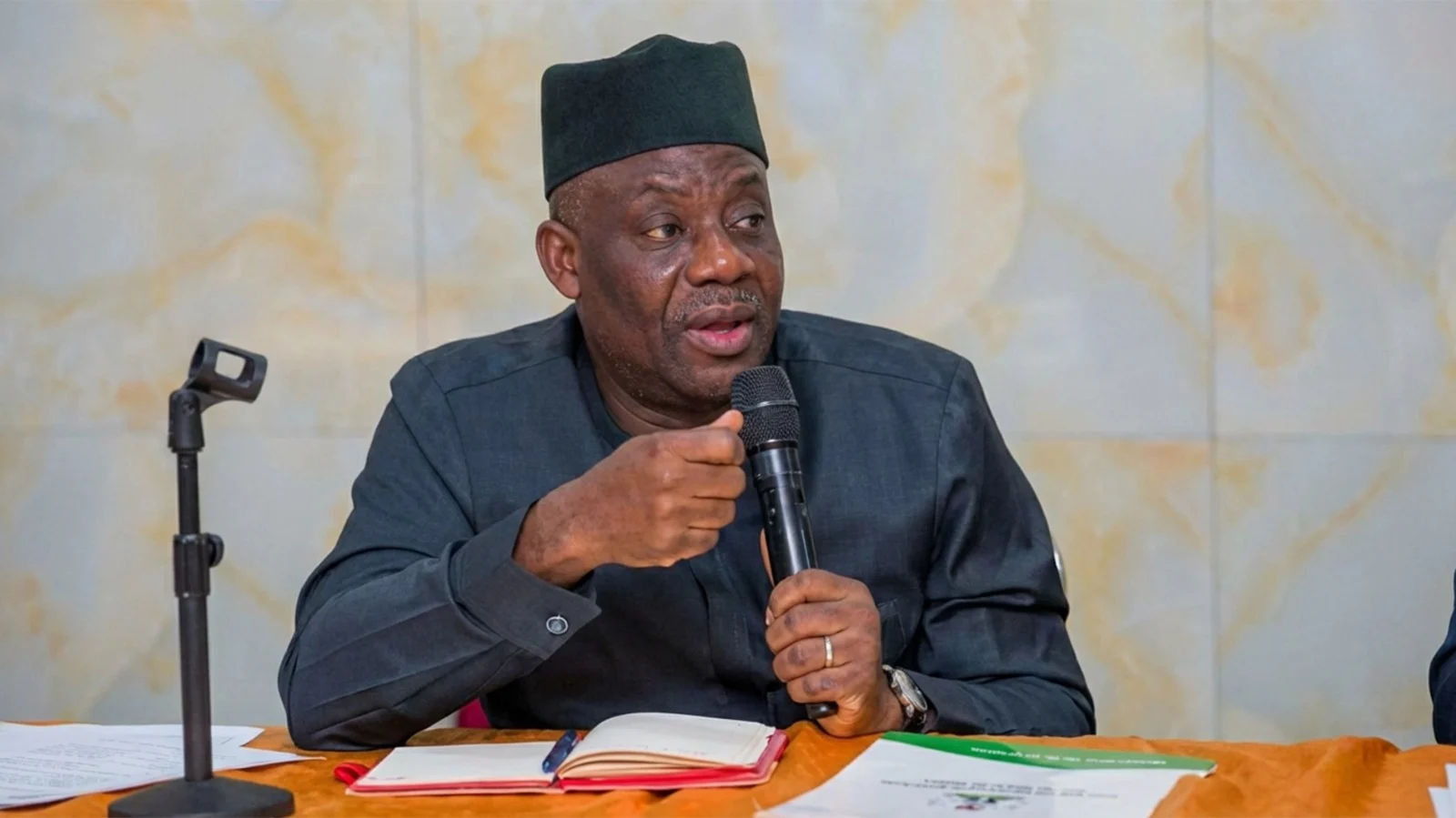
Minister of Education, Dr Tunji Alausa, gave this assurance during a meeting with the National Committee for the Advancement of Occupational Therapy, Audiology and Speech and Language Therapy Education. Details of the meeting were shared in a statement issued Tuesday by the minister's Special Adviser on Media and Communications, Ikharo Attah.
According to Alausa, the administration has deliberately set out to dismantle the financial barriers that, for years, kept many young Nigerians out of tertiary institutions altogether, regardless of how academically capable they were.
"President, President Bola Ahmed Tinubu has opened up access to students so that not having money, or coming from an indigent family, or your parents being poor, will no longer stop you from achieving the opportunities you can achieve in life. Education is no longer a barrier for students in this country," he said. He framed the reforms not merely as welfare measures, but as a deliberate strategy to empower young Nigerians to become active contributors to national development.
Breaking down the scale of the government's investment, Alausa said ₦250 billion has gone into constructing new student hostels across tertiary institutions nationwide, a move aimed at easing the accommodation crisis that has long plagued Nigerian campuses. Alongside this, more than ₦150 billion has been spent rehabilitating existing hostels, classrooms and other academic facilities that had fallen into disrepair over the years.
He also disclosed that over ₦130 billion has been channelled into rehabilitating medical schools and expanding their capacity to train more doctors and health professionals. On top of that, ₦52 billion has been approved specifically for modern equipment in 18 medical schools, while nearly ₦30 billion has gone into establishing 11 medical simulation laboratories, facilities designed to give medical students hands-on practical training before they encounter real patients.
Engineering education has received similar attention, according to the minister. He said close to ₦110 billion has been committed to building and upgrading engineering workshops and equipment across federal universities of technology, conventional universities and polytechnics, an investment intended to ensure that engineering graduates leave school with practical, industry-relevant skills rather than purely theoretical knowledge.
Alausa described these interventions as among the largest ever recorded in the history of Nigeria's tertiary education sector, insisting that the ultimate goal is to produce graduates equipped with the technical capacity to drive industrialisation and broader economic growth. "This is amazing. This is just mind-boggling what this President has done in rapidly transforming tertiary education," he said, adding that his ministry remains committed to working closely with institutions to ensure these investments translate into tangible, measurable outcomes for students rather than remaining figures on paper.
At the same meeting, the Chairman of the National Committee for the Advancement of Occupational Therapy, Audiology and Speech and Language Therapy Education, Dr Victoria Omua Amu, briefed the minister on the committee's progress since its formation. She spoke of a one-year implementation plan now in place, a new governance framework guiding the committee's operations, and specialised subcommittees dedicated specifically to advocacy and manpower development within these fields.
Amu also gave a snapshot of where these specialised programmes currently stand nationwide. She noted that six Nigerian universities now run Audiology programmes, five offer Occupational Therapy, and three offer Speech and Language Therapy, a spread she described as still far too limited given the country's population and healthcare needs. She added that the University of Benin is set to launch its own Occupational Therapy programme in the 2026/2027 academic session, calling it a welcome addition to a still-thin pool of institutions offering these specialisations.
Despite this progress, Amu was candid about the obstacles still facing the committee's work. She identified delays in the release of TETFund support as one of the most pressing challenges slowing down implementation, suggesting that funding bottlenecks remain a persistent hurdle even as the broader education sector records notable gains elsewhere.
This wider push to expand access to higher education fits squarely within the Tinubu administration's Renewed Hope Agenda, an agenda that has already produced the Nigerian Education Loan Fund, offering interest-free loans to eligible students who might otherwise be unable to afford school fees. It has also driven a steady rise in infrastructure investment channelled through the Tertiary Education Trust Fund. Taken together, government officials argue, these measures represent a coordinated, long-term attempt to ensure that ambition and academic merit, rather than family income or social background, ultimately determine who gets the chance to pursue a university education in Nigeria.