

The Giant Awakens: Why Nigeria’s Record Breaking Performance in the 2026 World University Rankings Matters for Every Student
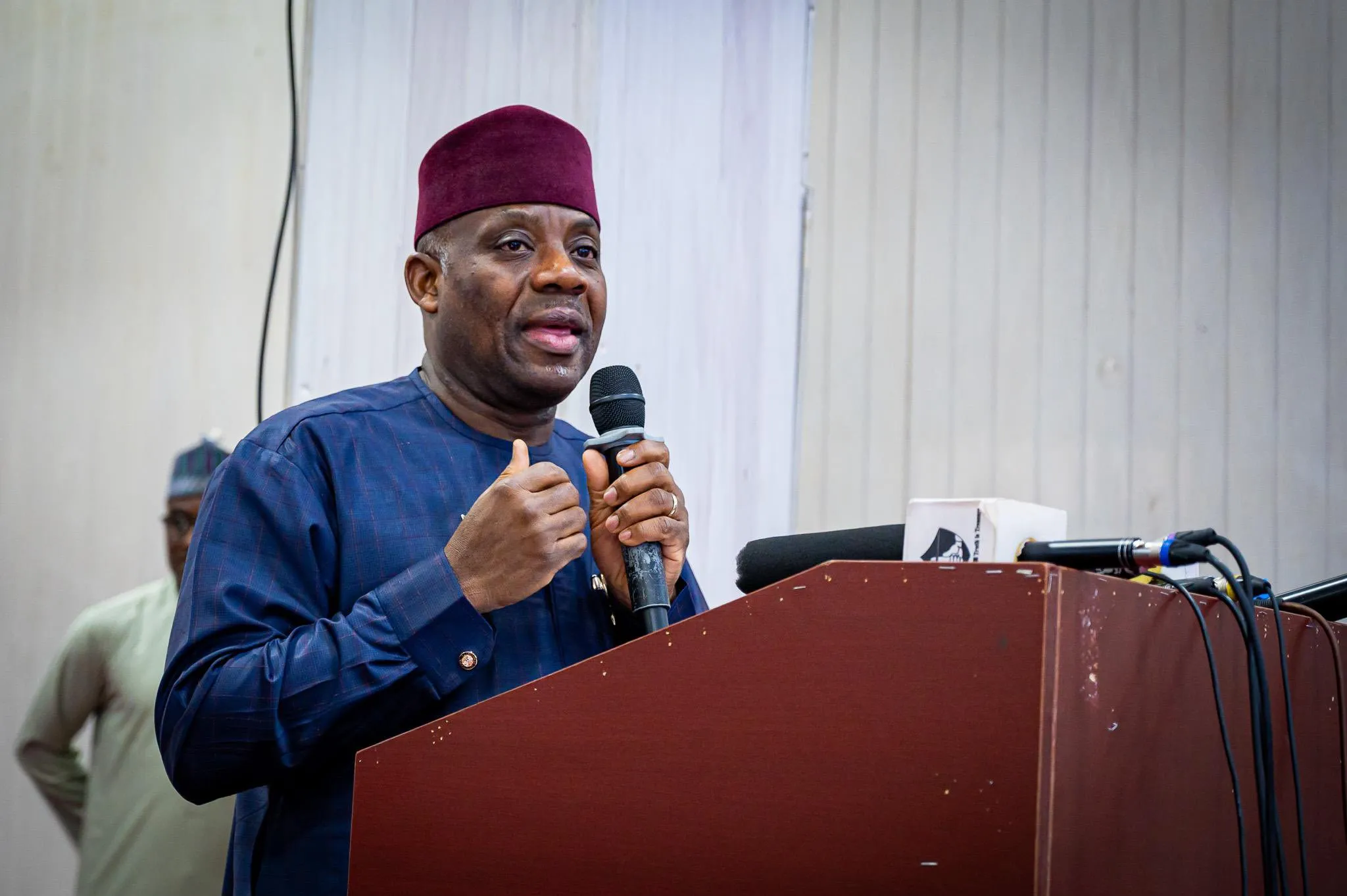
There is a specific kind of pride that comes with being a Nigerian. We love to see our names at the top of the list, whether it is in music, sports, or business. For a long time, however, the news coming out of our education sector felt like a heavy cloud. We heard about strikes, aging buildings, and the "brain drain" of our best professors moving abroad. But this weekend, the Minister of Education, Tunji Alausa, gave us a reason to hold our heads a little higher.
In a post that has quickly gone viral across the academic community, the Minister revealed that Nigerian universities have delivered their best performance ever in the 2026 Times Higher Education World University Rankings. For the first time, 24 of our institutions have made it onto this prestigious global list. This is up from 21 in previous years. Even more impressively, this jump has positioned Nigeria as the most represented country in all of Sub-Saharan Africa.
It is easy to look at these things as just "government talk" or "statistics for the elite," but for the average Nigerian student or parent, this news is deeply practical. It represents a shift in the quality of the degree you are holding or working toward. Let us take a look at what is actually happening behind these numbers and why this moment feels different.
The Victory of the Public System
One of the most important parts of the Minister’s announcement was the breakdown of the schools. Out of the 24 ranked universities, 17 are federal institutions. This is a huge deal. In recent years, there has been a growing belief that if you want a quality education in Nigeria, you must go to an expensive private university. People assumed that public universities were "dying" and could no longer compete.
But these rankings tell a different story. When 17 of our federal universities, including the University of Ibadan, the University of Lagos, and Bayero University in Kano, can stand toe to toe with the best in the world, it shows that the heart of our public education system is still beating. It proves that despite the challenges, our public schools are finding ways to innovate, conduct research, and maintain standards. This is good news for the millions of Nigerian families who rely on federal universities for affordable, high quality education.
What Does a "Ranking" Actually Mean for a Student?
You might ask yourself, "Will my lecturer teach better just because the school is ranked?" The answer is that a ranking is a reflection of the environment you are learning in. Times Higher Education does not just look at how pretty the campus is. They look at research, innovation, digital transformation, and governance.
When the Minister talks about "measurable results," he is talking about schools that are finally embracing the 21st century. It means more professors are publishing groundbreaking research that the world is reading. It means universities are using digital tools to make learning more accessible. It means that the administration of these schools is becoming more transparent and efficient. For a student, this means your certificate carries more weight when you apply for a Master’s degree abroad or a job at a global company. You are no longer just a graduate from a "local" school; you are a graduate from a globally recognized institution.
The Culture of Transparency and Benchmarking
Another fascinating detail in the Minister’s report is that 27 additional Nigerian universities took part in the assessment process for the first time this year. They did not all make the final list, but the fact that they allowed themselves to be graded by a global body is a massive step forward.
In the past, many of our institutions operated in a vacuum. They didn't really care how they compared to schools in South Africa, Egypt, or the UK. But now, there is a growing commitment to benchmarking. These 27 schools are essentially saying, "We want to know where we are failing so we can improve." This culture of accountability is exactly what the Nigerian Education Sector Renewal Initiative (NESRI) is trying to build. It is about moving away from the "business as usual" mindset and toward a system of continuous improvement.
The "Renewed Hope" Reforms: Beyond the Slogans
Minister Alausa credited these successes to the education reforms under President Bola Tinubu’s administration. He spoke about ongoing investments in infrastructure and quality assurance. While we still see many schools that need urgent repairs, it is clear that there is a focused effort to modernize the sector.
The goal of these reforms is to ensure that Nigerian universities produce the talent needed to shape the country’s future. We don't just need people with degrees; we need people with skills. We need innovators who can solve our power problems, our agricultural challenges, and our economic issues. By pushing our universities to rank higher, the government is forcing them to focus on the things that actually matter in the modern world: research and innovation.
Practical Advice for Students and Parents
While we celebrate this milestone, we must remain grounded. A university ranking is a great sign of progress, but your personal success still depends on your effort. Here is how you can use this information practically.
First, if you are choosing a university, look at these rankings. See which schools are excelling in research and digital tools. Second, take pride in your institution but also demand more. If your school is ranked globally, it means they have the potential to be even better. Hold your student unions and faculty accountable for maintaining these standards.
Third, use the "digital transformation" the Minister mentioned to your advantage. If your school is investing in digital libraries and online resources, make sure you are using them. In 2026, a student who is not tech savvy is at a disadvantage, no matter how highly their school is ranked. Resources like La-Net Hub can also help you bridge the gap between your classroom lessons and global standards, ensuring that you are as competitive as the school you attend.
The Road Ahead
The Minister reaffirmed that the government is committed to the Nigerian Education Sector Renewal Initiative. This is a long term journey. We have moved from 21 to 24 ranked schools, but we have over 200 universities in Nigeria. The dream should be to see 50, then 100, and eventually all our schools on that list.
The fact that we are currently the most represented country in Sub-Saharan Africa is a "flex" that we should be proud of, but it should also be a wake up call. It shows us what is possible when we focus on research, quality, and governance. It shows that our "public" system is not a lost cause.
The 2026 rankings are a snapshot of a sector that is slowly but surely waking up. We are starting to see the knowledge, innovation, and talent that Alausa spoke about. For the student in a lecture hall in Ibadan, Lagos, or Kano, the message is clear. The world is watching, the standards are rising, and your degree is becoming more valuable by the day. Let us keep the momentum going. Let us keep researching, keep innovating, and keep proving that Nigerian excellence is not an accident, it is the result of hard work and deliberate reform.