

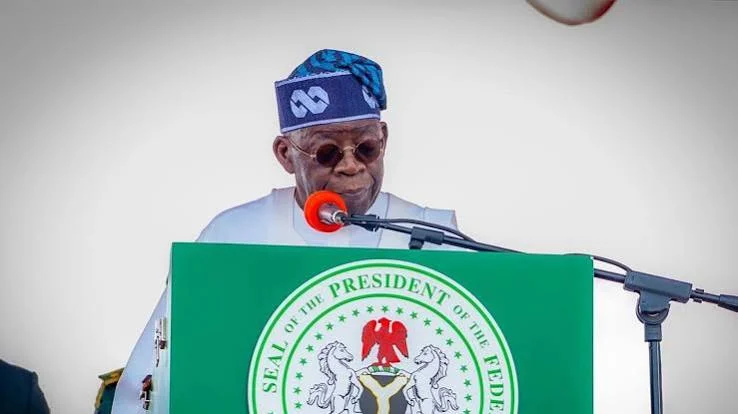
Absence of ASUU Strikes an Answer to My Prayers - President Tinubu
If you have ever been a student in a Nigerian public university, you know that the most dangerous question anyone can ask you is "When are you graduating?" In many parts of the world, that is a simple question with a mathematical answer. But in Nigeria, for the better part of the last two decades, that question was a source of deep anxiety, frustration, and sometimes even tears. You could gain admission for a four year course in 2018 and find yourself still clutching a student ID card in 2023. The culprit was almost always the same: the industrial action by the Academic Staff Union of Universities, popularly known as ASUU.
This is why the comments made by President Bola Tinubu this Tuesday in Abuja are so significant. While receiving members of the Catholic Bishops’ Conference of Nigeria at the Aso Rock Presidential Villa, the President made a bold claim. He stated that the absence of ASUU strikes under his administration is not just a policy success but an "answer to his prayers." For a President who has had to navigate some of the most difficult economic waters in recent history, this stability in the education sector is something he clearly views as a major win for the average Nigerian home.
Let’s be honest about the human cost of these strikes. When the gates of a university are locked for six or nine months, it is not just the "academic calendar" that stops. Lives stop. We have seen students who lost their passion for learning and turned to other, less savory activities. We have seen parents who saved up for a four year program only to realize they had to keep paying for accommodation and feeding for six years. We have seen young people who missed out on age-limited job opportunities or international scholarships because their transcripts were stuck in a closed administrative office.
President Tinubu’s remarks to the Reverend Fathers were pointed and very practical. He noted that today, a student can finally say that a four year course will actually take four years. He described the absence of strikes as a way of removing "agony" from the homes of Nigerians. To the President, this peace between the government and the lecturers is a sign that the country is stabilizing, even if the road to full prosperity still feels long and bumpy.
The President was very candid about the state of the nation. He acknowledged that he inherited a mixture of "assets and liabilities" from his predecessor and that he has been running with that burden since May 2023. While many Nigerians are currently feeling the pinch of inflation and the high cost of living, Tinubu maintained that the quality of life is on an upward trajectory. He spoke about a "horizon of prosperity" that is finally coming into view. In his mind, keeping the universities open is a foundational part of that prosperity.
To understand why the President is calling this an "answer to prayers," we have to look at the grim history of the ASUU struggle. Between 1999 and 2022, the union embarked on strikes that collectively cost Nigerian students more than five years of their lives. That is an entire generation of lost time. The most recent nightmare was the 2022 strike, which lasted for nine grueling months. For almost an entire year, the ivory towers were silent, and the futures of millions of young people were put on hold.
Since Tinubu took office in May 2023, that pattern has been broken. We have seen a year of uninterrupted learning in the federal and state universities. This stability has also allowed for the launch of the Nigerian Education Loan Fund, which is designed to make sure that even in a tough economy, no student is forced to drop out because they cannot afford their fees. By combining a "no strike" environment with a "no tuition barrier" policy through NELFUND, the administration is trying to build a new model for Nigerian higher education.
The audience for this speech was also very important. The Catholic Bishops’ Conference of Nigeria is one of the most influential and respected organizations in the country. Since its establishment in 1956, the Catholic Church has been a massive player in Nigeria’s education and healthcare sectors. They run some of the best schools and hospitals in the country, and their voice carries a lot of moral weight. By speaking to them, the President was speaking to a group that understands the "agony" of the people better than almost anyone else.
The President also touched on the complex issue of security. He noted that while the situation remains challenging, Nigeria is the only country we have. He referenced the national anthem, reminding the Bishops that in our complexity and diversity, we must find a way to thrive and be good to one another. It was a call for national unity at a time when many are feeling discouraged.
But the core of the message remains the classroom. For the student in the 200 level of a Mechanical Engineering program or the girl in her first year of Law, the President’s "prayers" are their reality. There is a psychological peace that comes with knowing your exam will happen when it is supposed to happen. It allows you to plan your life. It allows you to dream about your NYSC year, your first job, or starting your own business.
However, we must also be realistic. This "peace" is a fragile one. ASUU has not officially ended its long list of demands regarding funding, salaries, and university autonomy. They are watching the government’s every move. The President’s "answer to prayers" will only remain true if the government continues to engage with the lecturers in good faith. We cannot afford to go back to the days of 2022. The stability we see today must be protected with consistent dialogue and a genuine commitment to funding our institutions.
In conclusion, the President’s remarks at the Villa were a reminder that sometimes the biggest successes are the things that don’t happen. The fact that we don’t have students sitting at home today is a massive, silent achievement. If we can keep the universities open, keep the students learning, and keep the four year promise alive, then maybe that horizon of prosperity the President spoke about will get a lot closer for all of us. For every Nigerian parent who has ever worried about a strike, and for every student who just wants to finish their degree and get to work, we can only hope that these "prayers" continue to be answered for many years to come. The future of the country is in those classrooms, and as long as the doors are open, there is hope.