

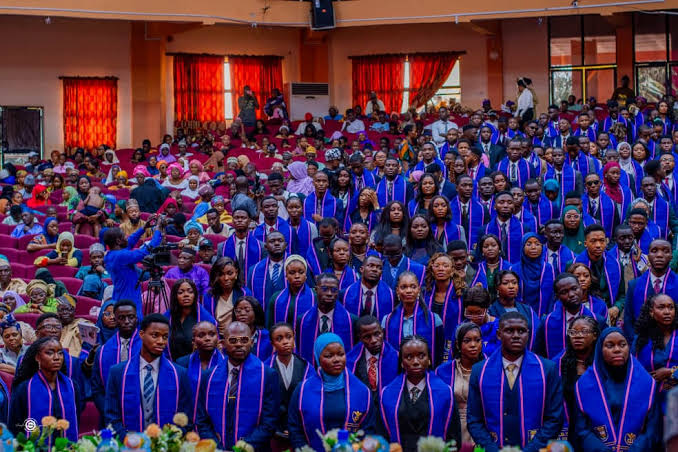
44 UNILORIN Medical Graduates Left Without Induction After Quota Breach.
Forty-four medical graduates of the University of Ilorin, UNILORIN, are still stuck outside the medical profession almost nine months after finishing their degree. They passed their exams. They completed the programme. They did what students are expected to do. Yet they have not been inducted because the university admitted more students into Medicine and Surgery than the Medical and Dental Council of Nigeria, MDCN, allows.
According to Premium Times, 194 students sat for their final MBBS professional examinations in August 2025. A total of 175 passed immediately, while the remaining 19 later passed their resit examinations. In the end, all 194 students successfully completed the academic part of the programme. The class had already spent eight years studying a course designed to last six years. ASUU strikes and the COVID-19 shutdown added about two extra years to their training. After that long wait, many of them expected the final step to be simple. Finish the exams, get inducted, and move on. That did not happen.
When the MDCN came to UNILORIN in November 2025 for the induction, the problem finally came into the open. The Council confirmed that the approved quota for the university's Medicine and Surgery programme was 150 students. But 194 students had passed and were ready for induction. There were 44 more graduates than the university was allowed to present.
UNILORIN then ranked all 194 successful students by academic performance. The top 150 were selected for induction. The remaining 44 were left out.
That decision changed everything for the affected graduates. They had passed the same final professional examinations. They had completed the same long programme. They had spent years in lecture rooms, laboratories, clinics, wards, and examination halls. They were not accused of cheating. They were not accused of misconduct. They did not fail. Still, they were sent home because the university had gone beyond its approved admission limit years earlier.
The roots of the problem go back to 2017 and 2018. Reports say UNILORIN admitted more than 200 students into Medicine and Surgery in those years, even though the MDCN-approved quota was 150. The difference was large, and the issue remained unresolved for years. The students kept moving through the programme while university administrations changed. Nobody stopped the problem before it reached the final stage. By the time the 2025 class was ready for induction, the numbers could no longer be ignored.
For the students caught in the middle, the situation is painful because they had no control over the admission figures. They applied to the university. The university admitted them. They paid fees, attended classes, met academic demands, and passed their professional examinations. Years later, they are now carrying the weight of a decision made by the institution that admitted them.
One affected graduate told Premium Times that the class had planned to challenge the university in October 2025. The students reportedly prepared a petition against the ranking system that would decide who got inducted. The petition was later withdrawn. According to the report, there were concerns that pushing the matter further could lead to more problems for the students. That fear added another layer to an already difficult situation.
The UNILORIN case is also not an isolated one. Similar quota problems have affected students in other Nigerian universities and professional programmes. In 2025, the MDCN reportedly refused to induct more than 300 dentistry graduates from the University of Calabar because of a similar quota breach. In 2023, the Council for Legal Education placed a five-year admissions ban on the law faculty of Baze University after repeated quota violations. More than 347 students were reportedly left waiting to enter the Nigerian Law School.
Now there are signs that the UNILORIN problem may continue beyond the current 44 graduates. Sources cited by TheCable say the university is considering an indexing system that could also affect the present 600-level MBBS class. Their final examinations are scheduled for September and October 2026.
Under the reported system, only the top 150 students in each group would be inducted. The others would move into later induction cycles and wait for available spaces. Those who miss one cycle would have to wait for another. Sources said it could take around nine induction cycles before the entire backlog is cleared.
That possibility has created more concern because it could turn one unresolved problem into a long chain of delayed inductions. Students could finish medical school and still remain unable to move into the next stage of professional life for months or even longer.
UNILORIN spokesperson Kunle Akogun addressed the matter in July 2026. He told TheCable that the university was making "every necessary effort" to ensure that the affected graduates were inducted "in the shortest possible time." He also said student welfare remained a priority for the institution.
However, no specific date was given for the induction of the 44 graduates. The university also did not directly explain the reported indexing plan or say how long the affected graduates would still have to wait.
The situation becomes even harder to understand when placed beside Nigeria's shortage of doctors. The country is estimated to have about one doctor for every 2,500 people. The World Health Organisation recommends roughly one doctor for every 1,000 people. Nigeria already needs more medical professionals, yet 44 graduates who have completed their training are still unable to fully enter the profession.
For these graduates, the issue is not a small delay on paper. Eight years of their lives went into medical training. They endured strikes, shutdowns, long academic sessions, difficult professional examinations, and the heavy pressure that comes with studying Medicine and Surgery. They reached the finish line and passed. Yet the final door remains closed because the number admitted by the university years ago was higher than the approved quota.
The responsibility now lies with UNILORIN and the MDCN to find a clear and fair solution. The affected graduates have already completed the academic work required of them. They should not remain trapped in a problem created long before they reached their final examinations. After eight years of training and almost nine months of waiting, they are still asking for the one thing they expected to receive after passing: the chance to enter the medical profession they worked so hard to join.