

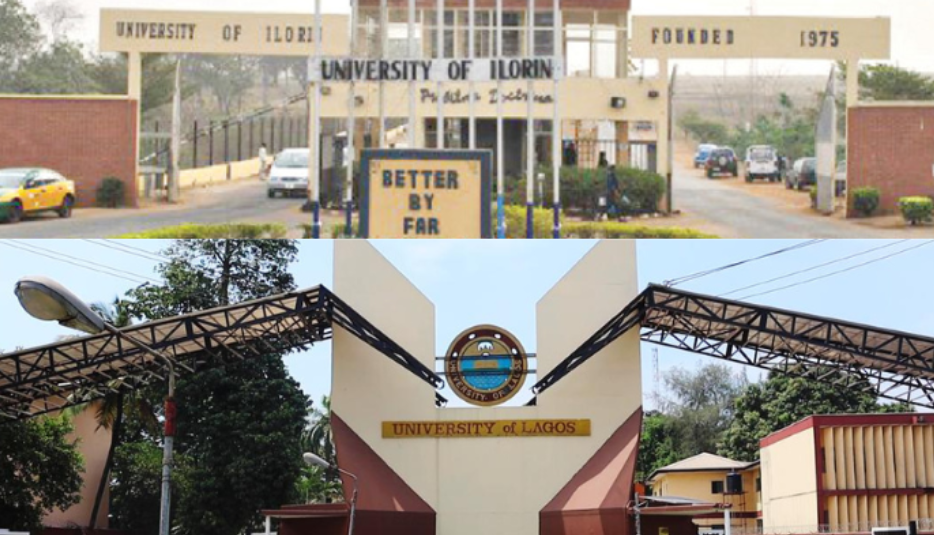
Full List: 24 Nigerian Universities Make the 2026 Times Higher Education Rankings
Nigeria's universities have given the country's higher education sector something to celebrate after 24 Nigerian institutions were listed in the 2026 Times Higher Education (THE) World University Rankings and THE Sub-Saharan Africa University Rankings.
The figure represents Nigeria's strongest showing so far, increasing from 21 universities in both the 2024 and 2025 editions.
It also puts Nigeria at the top of the table when it comes to representation in Sub-Saharan Africa. With 24 institutions on the list, Nigeria has more universities represented than any other country in the region.
For students planning where to study, parents trying to understand the strength of different institutions, and even current undergraduates wondering how their university compares internationally, the rankings offer an interesting snapshot of where Nigerian higher education currently stands.
But beyond the numbers, the bigger story is that more Nigerian universities are beginning to gain visibility on the international stage.
University of Ibadan Remains Nigeria's Top Performer
At the top of Nigeria's list is the University of Ibadan (UI), which retained its position as the country's highest-ranked university.
UI's continued strong performance is significant because the institution has long been regarded as one of Nigeria's leading universities. Its appearance at the top of the national list shows that it continues to maintain a strong presence in international rankings.
Close behind is the University of Lagos (UNILAG), another institution with a long history of academic and research activity.
Rounding out Nigeria's top three is Bayero University, Kano (BUK).
The performance of these three universities is noteworthy, but perhaps one of the more interesting things about this year's list is the variety of institutions represented.
The universities are not limited to Nigeria's oldest or most widely known schools.
The 24 Nigerian Universities on the List
The 2026 rankings feature universities from different parts of the country and different ownership categories.
The Nigerian institutions represented are:
- University of Ibadan
- University of Lagos
- Bayero University, Kano
- Covenant University
- Landmark University
- Ahmadu Bello University
- Federal University of Technology, Minna
- University of Ilorin
- University of Jos
- University of Nigeria, Nsukka
- Babcock University
- Delta State University, Abraka
- Ekiti State University
- Federal University of Agriculture, Abeokuta
- Federal University of Technology, Akure
- Federal University of Technology, Owerri
- Federal University, Oye-Ekiti
- Ladoke Akintola University of Technology
- Lagos State University
- Nnamdi Azikiwe University
- Obafemi Awolowo University
- University of Benin
- University of Calabar
- University of Port Harcourt
The list includes institutions that have traditionally been prominent in Nigerian higher education, as well as universities that have continued to build their reputations through research, teaching and other academic activities.
Federal Universities Still Dominate
One clear feature of the rankings is the strong representation of federal universities.
Of the 24 Nigerian institutions included, 17 are federal universities, while four are state-owned and three are private universities.
That means federal institutions account for the majority of Nigeria's representation.
However, the presence of state and private universities is also worth noting.
Universities such as Covenant University, Landmark University and Babcock University demonstrate that private institutions are also gaining international visibility.
The inclusion of state universities such as Lagos State University, Ekiti State University and Delta State University also shows that strong academic performance is not limited entirely to federal institutions.
For prospective students, this is a useful reminder that choosing a university should involve more than simply asking whether it is federal, state or private.
The quality of a particular programme, teaching, facilities, research opportunities and the student's own goals should also be considered.
Technology and Agriculture Universities Make Their Mark
Another interesting feature of Nigeria's performance is the presence of several specialised institutions.
Universities such as Federal University of Technology, Minna (FUTMinna), Federal University of Technology, Akure (FUTA), Federal University of Technology, Owerri (FUTO) and Federal University of Agriculture, Abeokuta (FUNAAB) all made the list.
Their inclusion highlights the role specialised universities can play in Nigeria's higher education system.
Nigeria needs graduates with strong skills in technology, agriculture, engineering and other technical fields, particularly as the country looks to diversify its economy and develop industries beyond traditional sectors.
The international visibility of these institutions could also help attract research partnerships, collaborations and opportunities for students and academics.
South-South Representation Remains Low
While Nigeria's overall performance is encouraging, the rankings also reveal a regional imbalance.
Only four universities from the South-South geopolitical zone made the list.
They are:
- Delta State University, Abraka — 12th nationally
- University of Benin — 22nd nationally
- University of Calabar — 23rd nationally
- University of Port Harcourt — 24th nationally
Their presence is certainly positive, but the relatively small number of South-South institutions compared with other parts of the country raises questions about how universities across different regions can improve their international visibility.
Global rankings can sometimes expose gaps that may not be obvious when looking only at national reputation.
A university can be highly respected within its local community and still struggle to make an impact in international rankings.
What Does THE Actually Measure?
It is easy to look at a university ranking and assume that the list is simply based on reputation.
That is not quite how the Times Higher Education rankings work.
THE evaluates universities across several areas, including teaching, research environment, research quality, industry engagement and international outlook.
This means the rankings attempt to look at different aspects of university performance rather than relying entirely on what people think about an institution.
Research is particularly important because universities are expected to contribute new knowledge, while industry engagement looks at how effectively institutions connect their expertise with the wider economy.
International outlook is also considered, reflecting the extent to which universities engage with the global academic community.
For students, this means a university's position on the list can provide useful information, but it should not be the only factor considered when choosing where to study.
Why These Rankings Matter to Students
University rankings may sometimes seem like something that matters mainly to administrators, but they can have practical implications for students.
A university with strong research activity may offer students greater opportunities to participate in research projects, internships or academic collaborations.
Strong industry connections can potentially create opportunities for students to gain practical experience, while international partnerships may expose students to exchange programmes and broader academic networks.
However, students should still look beyond the overall ranking.
If a student wants to study Engineering, for example, the strength of the university's engineering programme may matter more than its overall position on a general ranking table.
The same applies to Medicine, Law, Computer Science, Education or any other field.
A Positive Sign, But Not the Finish Line
Nigeria's 24 universities in the 2026 rankings represent a clear improvement from the 21 recorded in the previous two editions.
Being the most represented country in Sub-Saharan Africa is also an achievement worth recognising.
But the bigger challenge is ensuring that this progress continues.
More universities appearing in international rankings is encouraging, but Nigerian higher education still faces familiar challenges, including funding pressures, infrastructure gaps, limited research resources and the need to strengthen links between universities and industry.
The rankings should therefore be viewed as a measure of progress, not a reason to stop improving.
For Nigerian students, the most important question remains whether universities are giving them the knowledge and practical skills they need to succeed after graduation.
Platforms such as La-Net Hub can complement university learning by helping students revisit difficult topics, practise questions and build stronger study habits throughout their academic journey.
Nigeria's Higher Education Sector Has Reason to Be Hopeful
The 2026 THE rankings provide a welcome piece of news for Nigeria's education sector.
With 24 universities represented, up from 21 in each of the previous two editions, the country is clearly gaining greater visibility in the global higher education space.
The strong performance of the University of Ibadan, University of Lagos and Bayero University, Kano, alongside the growing representation of specialised, state and private institutions, paints a picture of a sector with significant potential.
The next step is to build on that progress.
Nigeria needs universities that do more than produce graduates. It needs institutions that conduct meaningful research, work with industry, develop useful innovations and prepare students for an increasingly competitive world.
If universities, government and industry can continue moving in that direction, the number of Nigerian institutions appearing on global rankings may not only continue to rise—the quality and impact behind those rankings could become even more meaningful.
For now, 24 universities on the 2026 list is a milestone worth celebrating. But perhaps the real goal should be to make sure that the next generation of Nigerian students has even more world-class institutions to choose from.