Nigeria's free digital learning hub. Videos, lecture notes, practice questions and leaderboards aligned with CCMAS, NBTE, NCCE, WAEC, NECO, IJMB and JAMB curricula.
Loading
Nigeria's free digital learning hub. Videos, lecture notes, practice questions and leaderboards aligned with CCMAS, NBTE, NCCE, WAEC, NECO, IJMB and JAMB curricula.
History and International Studies · 200 Level · Second Semester
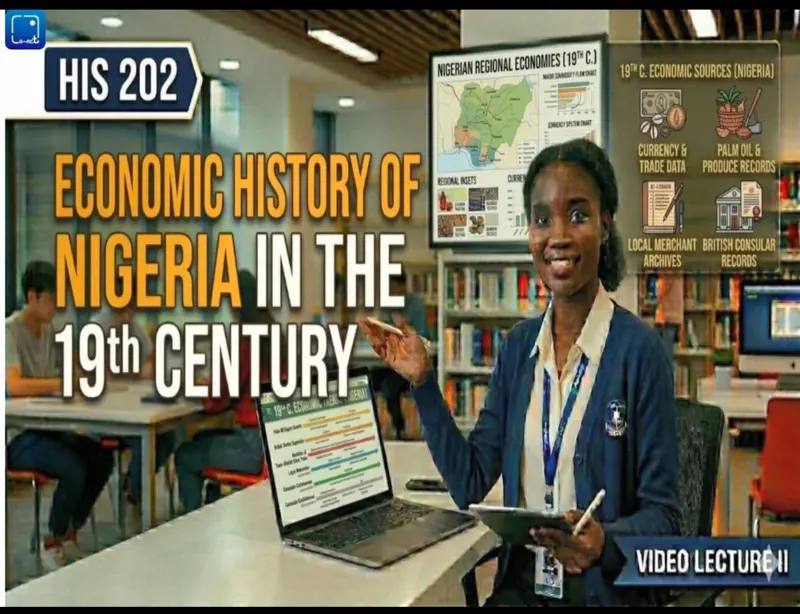
HIS202 Economic History of Nigeria in the 19th Century is a 200 Level course in the History and International Studies department, taught in the Second Semester. On La-Net Hub you can watch all 22 recorded lectures for free, grouped into 10 series, read the course lecture note online or download it as a PDF, and test yourself with practice questions.
Atlantic Slave Trade & Historical Trade Heroes is a course that examines the history and impact of the Atlantic slave trade on African societies and the wider world, focusing on its economic, social, and political consequences. It explores the roles played by African leaders, European traders, and intermediaries in the trade, as well as the resistance, resilience, and contributions of notable historical figures often referred to as trade heroes. The course highlights how the slave trade reshaped economies, disrupted communities, and influenced global trade patterns, while also recognizing individuals and groups who played significant roles in commerce, diplomacy, and efforts to challenge exploitation during this period.
Labour Relations and Economic Structures is a course that explores the organization of labor and the economic systems within which it operates. It examines the relationships between workers, employers, and institutions, focusing on how factors such as wages, working conditions, and labor policies influence productivity and economic development. The course also analyzes different types of economic structures, including traditional, capitalist, and mixed economies, and how they shape patterns of employment, class relations, and distribution of wealth, helping students understand the role of labor in shaping both historical and modern economies.