Nigeria's free digital learning hub. Videos, lecture notes, practice questions and leaderboards aligned with CCMAS, NBTE, NCCE, WAEC, NECO, IJMB and JAMB curricula.
Loading
Nigeria's free digital learning hub. Videos, lecture notes, practice questions and leaderboards aligned with CCMAS, NBTE, NCCE, WAEC, NECO, IJMB and JAMB curricula.
Gender Studies · 100 Level · Second Semester
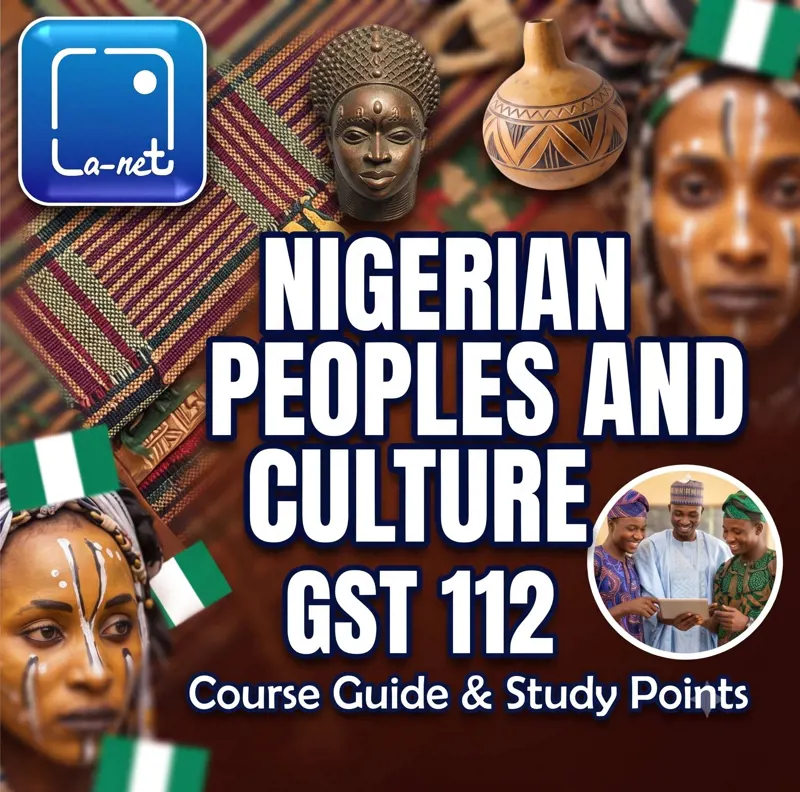
GST 112 Nigerian People and Culture is a 100 Level course in the Gender Studies department, taught in the Second Semester. On La-Net Hub you can watch all 30 recorded lectures for free, grouped into 10 series, read the course lecture note online or download it as a PDF, and test yourself with practice questions.
Foundations of Nigerian Culture explores the origins, values, beliefs, traditions, and social institutions that shape the cultural identity of Nigeria's diverse ethnic groups. It examines key aspects of Nigerian culture, including language, religion, family systems, marriage customs, arts, music, festivals, traditional governance, and indigenous knowledge systems, highlighting how these elements contribute to national identity and social cohesion. The topic also considers the influence of historical events, colonialism, and globalization on the evolution of Nigerian cultural practices. Course objectives include enabling learners to understand the fundamental components of Nigerian culture, appreciate the country's cultural diversity and heritage, analyze the role of culture in shaping social behavior and national development, and develop respect for the values and traditions that promote unity and cultural continuity in Nigeria.
Colonial Rule and Administration examines the systems, policies, and structures established by colonial powers to govern territories under their control, particularly in Africa and Nigeria. It explores the objectives and methods of colonial administration, including direct and indirect rule, taxation, economic exploitation, legal systems, and the reorganization of political and social institutions. The topic also highlights the impact of colonial governance on indigenous societies, cultural practices, economic development, and the formation of modern states, while assessing the legacies of colonialism in contemporary society. Course objectives include enabling learners to understand the nature and objectives of colonial rule, analyze different administrative systems used by colonial governments, evaluate the social, political, and economic effects of colonialism, and develop critical perspectives on the influence of colonial administration on post-colonial development and national identity.